Documentary – Participatory Democracy Around the World

Via the Hunger Project blog I came across this short documentary on participatory democracy, “People Power”, produced by TV Education Asia Pacific and first broadcast on BBC World in 2004. Below, excerpts from the summary by TV EAP of each of the case studies in four countries (India, Malawi, Brazil and Ireland) and their respective videos:

  • Rajasthan, India

It’s state elections in Rajasthan and Mazdoor Kisan Shakti Sangathan (MKSS), a local activist group invites the people of Beawar to a public meeting where the affidavits on the local candidates are made available to the people. This process of social accountability and transparency extends beyond the political process to the village level, where the MKSS has successfully lobbied for the right to information legislation to overcome the systemic corruption in the political and bureaucratic organisations.

  • Malawi

In Malawi, Africa, people can expect to live only half as long as someone in the Western World. Since most people live in rural communities, the Village Health Service is the life line for most people. But there has been dissatisfaction with the delivery of this service. Care Malawi is piloting a local health initiative program, referred to as the Community Scorecard Project, where the running of the local health services is put back into the hands of the villagers. Here the village people meet and score the delivery of the health services and this is collated by a Village Health Council. At the same time, the Village Health Clinic does a self assessment. Interface meetings between the users of the service and the providers of the service to analyse the information and work out ways of improving the system.

  • Porto Alegre, Brazil

Porto Alegre has been acclaimed as the Brazilian city with the best quality of life for four consecutive years. The challenge is how to include the poorer people in this success. Housing is the major challenge for the City as rural people migrate to the city to seek work. The city government has adopted a program where the people participate in prioritising the City Budget. Over a year, from neighbourhood associations to people’s assemblies, up to 20,000 people have a direct say on how the city budget should be allocated. The Porto Alegre experiment is one of the best known worldwide, acclaimed for both the efficient and the highly democratic management of urban resources it has made possible. The “popular administration” of Porto Alegre was selected by the United Nations as one of the 40 urban innovations worldwide to be presented at the Second Conference on Human Settlements (Habitat II), held in Istanbul in June 1996.

  • Ireland

A social and economic partnership was formed with all the stakeholders: the national government, the trade unions, the employers and the community to develop a national strategy for Ireland. The Northside Partnership was one of 11 partnerships created to translate the national strategy to the local level. This partnership identified the black spots: high local unemployment, youth leaving before they completed school and young children not going to school. Within this community, there has been an increase of over 50 per cent job creation, a series of specialised training programs and an innovate way to get children to go to school.

Trac FM – Monitoring Service Delivery

The Indigo Trust has awarded a grant of €13,500 to TRAC.fm to expand the network of organisations that use its data collection software to inform their social campaigns.

Screen Shot 2013-03-24 at 12.41.07

Trac FM provides radio stations in Africa with software and support to involve their listeners in reporting on failing governments services through SMS. Through Trac FM’s online interface, radio presenters get a clear and instant overview of SMS-poll results which they present to listeners during radio debates. Stations invite local leaders to comment on collected data and Trac FM makes sure data reaches responsible authorities. Trac FM wants people to be part of the running of their society and provide them with a platform to participate and discuss policy issues in an accessible and objective way.

Interesting initiative. Would be interested in finding out whether they measure their impact on service delivery and, if so, how.

Citizen Engagement – Seven Questions, One Conversation

(cross posted from the World Bank’s Voices Blog)

Calls for increased citizen empowerment are heard from across the spectrum, ranging from governments and donors to CSOs and multilateral efforts such as the Open Government Partnership.

The World Bank Group, in partnership withCIVICUS, the Government of Finland andInterAction will host a conference on citizen engagement on March 18, 2013 to highlight the value of engaging with citizens for effective development.

The Citizen Voices conference will focus on citizen engagement and feedback systems that strengthen the quality of policy making and service delivery, where the impact on the poor is most direct. The conference aims to explore how citizen engagement is essential for effective development, move from knowledge to action, and establish concrete partnerships for scaling up at global and national levels.

But while the claims for citizen engagement abound, less discussion is dedicated to how to design and implement participatory processes that deliver their expected benefits, such as increased accountability and better delivery of policies and services. As part of this problem, not enough attention is paid to the various outcomes that participatory processes may engender and what they mean for policy and development.

For instance, in some cases participation may lead to disappointing results, such as citizens’ mistrust of government, elite capture and public opinion polarization. Conversely, participation can also be associated with surprisingly positive outcomes, such as increased levels of tax compliance and reduced infant mortality. But how can we explain these disparities in results?

Shedding light on the question of when, why and how participation works is precisely the objective of this conversation. Thus, to kick off the debate, I would like to start by considering seven questions:

  • How can we measure the success of citizen engagement initiatives?
  • How essential are processes of organizational and institutional change?
  • Can political will towards increased participation be stimulated?
  • What role does organized civil society play in citizen engagement processes?
  • How can we foster inclusiveness and what are the impacts of different methods of participant selection (e.g. open, randomized)?
  • Can we learn anything from the private sector about listening to external audiences?
  • What is the actual role of technology (if any) in participatory processes?

Parallel to the event, and running until the end of this month, the World Bank has launched an online conversation on citizen engagement to help tackling these and other issues. Needless to say, the questions are far from exhaustive. Maybe some are even secondary. But I believe that considering them might bring us closer to answering an even more fundamental question: that is, how can we leverage the dispersed knowledge of citizens to shape decisions that affect their lives?

Join the conversation on Striking Poverty and follow the conference live on World Bank Live.

Transforming Local Civic Engagement Through an Online Game

(talk starts at 6:10)

The problem of civic engagement is often un­derstood as a lack of participation. People do not show up to meetings, they do not engage in their civic institutions or communicate with decision-makers.

The Engagement Game Lab has developed an online game called Community PlanIt—which has been played in six distinct planning processes ranging from urban planning in Detroit and Philadelphia to education planning in Boston—to explore how game mechanics and social interaction can move local civic processes beyond transactive participation towards a sustained, reflective mode of civic interaction.

In this talk, Eric Gordon—researcher, game designer, and Berkman Fellow—explores the unique affordances of Community PlanIt for building social trust, engaging youth in civic life, and developing shared local narratives.

More info about the event here.

Open Government and Democracy

The International Budget Partnership (IBP) has recently released the results of the Open Budget Survey 2012, which measures “the state of budget transparency, participation and oversight in 100 countries around the world”. In the survey report, the authors highlighted the positive relationship between budget transparency and democracy:

A democratic political system is a significant factor that supports budget transparency (…) In fact, a switch from autocracy to democracy is typically associated with an improvement in a country’s OBI score by almost 20 points, after controlling for other variables. In addition, transparency seems to depend much more on current levels of democracy than on how long a country has been a democracy: for countries in transition, this means that rapid improvements in transparency can be achieved without having to wait for slow processes of learning and adaptation.

This adds to a growing body of literature showing that democracies (and electoral competition) are indeed more transparent than other types of regime. If the relationship between democracy and openness comes across as obvious, it also opens space for some questions about the open government movement and its strategy to promote transparency.

Screen Shot 2013-03-07 at 00.42.12

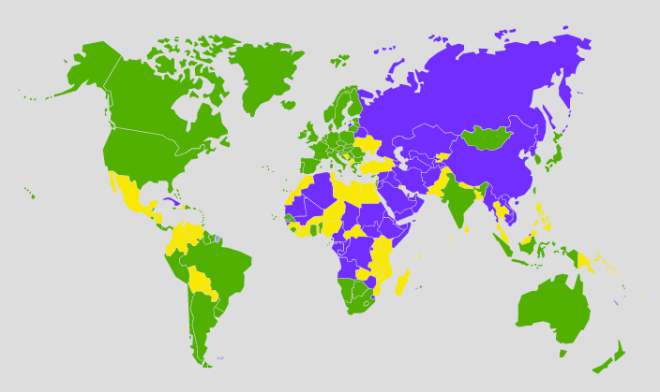
Political Rights and Civil Liberties in 2013 – Freedom House

Transparency, it seems, is one of the vital signs of well-functioning democracies. Chronic lack of transparency, on the other hand, emerges as the symptom of flawed democracies or authoritarian regimes. If this logic is correct (and the evidence suggests it is) advocating for transparency would correspond to treating the symptoms of a disease, rather than preventing it in the first place.

This is not to say that promoting transparency reforms (e.g. open data, open budgets) is a useless act. Treating a symptom is not a problem in itself: it alleviates the pain and may even prevent further complications. But neglecting to treat the cause of the symptom is surely a bad practice.

This begs a fundamental question: are open government advocates efficiently channelling their energy and resources when asking for more transparency from governments that have little or no inclination to democracy? Or are they failing to strike a balance which combines a focus on transparency with more fundamental reforms that promote, for instance, free, fair and competitive elections?

Granted, transparency and democracy are mutually reinforcing: it is difficult to think of a democracy without informed consent. And even well-established democracies still have a long way to go towards more transparency. But, for instance, going as far as considering that open government may blossom in non-democracies seems questionable to me. All the technology and transparency in the world is unlikely to realize its full potential in the absence of fundamental political rights and civil liberties.

It might be time to start focusing on the role that political regimes play in promoting values that are dear to the open government movement, such as transparency, participation and collaboration. And democracy – or lack thereof – is the elephant in the room.

***

Further reading

Alt, J. E., Lassen, D. D., & Rose, S. (2005). “The causes of fiscal transparency: Evidence from the US States.” IMF Staff Papers, 53(Special Issue), 30–57.

Alt, J. E., & Lowry, R. C. (2010). “Transparency and accountability: Empirical results for US States.” Journal of Theoretical Politics, 22(4), 379–406.

Hollyer, J. R., Rosendorff, B. P., & Vreeland, J. R. (2011). “Democracy and transparency.” Journal of Politics, 73(4), 1191–1205.

Rosendorff, B. Peter, and James Raymond Vreeland. (2004). “Democracy and Data Dissemination: The Effect of Political Regime on Transparency.” Working Paper, Yale. 

Rosendorff, B. Peter and Doces, John A. (2006). “Democracy and Transparency”. Swiss Political Science Review, 12 (3), 99-112.

Wehner, J. and de Renzio, P. (2013) “Citizens, Legislators, and Executive Disclosure: The Political Determinants of Fiscal Transparency.” World Development, 41, 96-108.

ITU releases latest global technology development figures

The ITU released its latest numbers on global technology development. Here’s a snapshot of some of them:

ICT Facts and Figures report predicts that there will soon be as many mobile-cellular subscriptions as people inhabiting the planet, with the figure set to nudge past the seven billion mark early in 2014. More than half of all mobile subscriptions are now in Asia, which remains the powerhouse of market growth, and by the end of 2013 overall mobile penetration rates will have reached 96% globally, 128% in the developed world, and 89% in developing countries.With many markets saturated, and penetration at over 100% in four of the six ITU world regions, mobile-cellular uptake is already slowing substantially, with growth rates falling to their lowest levels ever in both the developed and developing worlds.

ITU estimates that 2.7 billion people – or 39% of the world’s population – will be using the Internet by end 2013.

Internet access, however, will remain limited in the developing world, with only 31% of the population forecast to be online at the end of 2013, compared with 77% in the developed world. Europe will remain the world’s most connected region with 75% Internet penetration, largely outpacing Asia and the Pacific (32%) and Africa (16%).

Household Internet penetration – often considered the most important measure of Internet access – continues to rise. By end 2013, ITU estimates that 41% of the world’s households will be connected to the Internet.

Over the past four years, household access has grown fastest in Africa, with an annual growth rate of 27%. But despite a positive general trend, 90% of the 1.1 billion households around the world that are still unconnected are in the developing world.

Gender Gap

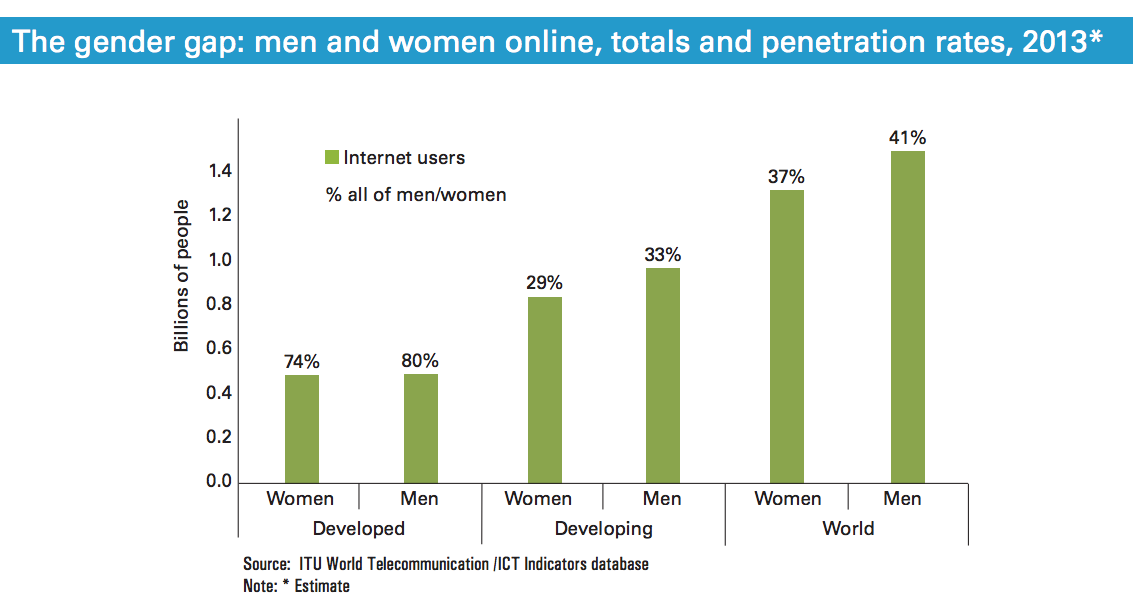
The report also reveals for the first time global figures on the number of women (1.3 billion) and men (1.5 billion) using the Internet. The figures represent 37% of all women, compared with 41% of all men – but the gender gap is more pronounced in the developing world, where 16% fewer women than men use the Internet, compared with only 2% fewer women than men in the developed world. However, despite the disparities, the gender gap continues to close, with access to mobile technology increasingly within reach of women worldwide.

The full report can be accessed here [PDF].


The Way to Randomized Controlled Trials in Open Government

As I have written before, we may start to see a growing number of studies using randomized controlled trials (RCTs) to assess the validity of claims for transparency and participation. And in fact some donors in the open government space have already started to ask for RCT evaluations as a component of projects to be funded. But they might be skipping some important steps. A brief comment from the Simply Statistics blog suggests that a sequential approach (with RCTs at the end rather than at the start) might be more appropriate and cost-effective:

A really nice example where epidemiological studies are later confirmed by a randomized trial. From a statistician’s point of view, this is the idealized way that science would work. First, data that are relatively cheap (observational/retrospective studies) are used to identify potential associations of interest. After a number of these studies show a similar effect, a randomized study is performed to confirm what we suspected from the cheaper studies.

I think this consideration is particularly important for those funding open government evaluation work. Before jumping on the RCT bandwagon, one should first look at pre-existing knowledge to consider which questions are to be asked. But having followed the #opengov conversation for a while, I’d say this doesn’t happen very often.  

Unequal Participation: Open Government’s Unresolved Dilemma

( cross-posted from techPresident)

In my frequent conversations about open government and citizen participation, the subject of elite capture (or “how representative it is”) is almost unavoidable. Some go as far as evaluating participatory initiatives on the grounds of an ideal notion of representativeness: participants should perfectly mirror the socio-demographic traits of the larger population from which they come.

But oddly enough, the same people who raise these concerns about participatory initiatives are much less inclined to apply the same reasoning and standards to traditional politics. In other words, few take the time to consider how representative and inclusive existing electoral democracy actually is. An article by Nicholas Carnes at the New York Times about political representation in the United States puts the issue into perspective:

If millionaires were a political party, that party would make up roughly 3 percent of American families, but it would have a super-majority in the Senate, a majority in the House, a majority on the Supreme Court and a man in the White House. If working-class Americans were a political party, that party would have made up more than half the country since the start of the 20th century. But legislators from that party (those who last worked in blue-collar jobs before entering politics) would never have held more than 2 percent of the seats in Congress.

I’ve yet to see a participatory process that produces similar results. But the limits of representation do not stop there. African Americans and Latinos are still greatly under-represented in US politics. The gender issue is no different: with the House of Representatives only 17 percent women, the Inter Parliamentary Union ranks the US 82nd in female representation in politics, behind countries such as the Arab Emirates, Sudan, Mauritania and Kazakhstan.

Obviously, the US is by no means exceptional in exclusion. Those working in the field of political participation have long been aware of the excluding effect of representative systems. As put by political scientist Arend Lijphart, unequal participation remains as representative democracy’s “unresolved dilemma.” Even more unfortunately, underlines Lijphart, inequalities in representation and influence “are not randomly distributed, but systematically biased in favor of more privileged citizens (…) and against less advantaged citizens”.

And it is from this unresolved dilemma that the raison d’être of participatory innovations stems. But rather than a replacement for representative systems (as misunderstood by some), participatory innovations are complementary mechanisms to enable the participation of individuals who are systematically excluded from traditional politics, ultimately increasing the overall diversity of voices that influence government.

This observation leads to a fundamental issue when assessing citizen participation initiatives: beyond questioning demographic representativeness, one must also consider the extent to which initiatives succeed (or not) in promoting the participation of previously marginalized sectors of society (i.e. inclusiveness).

So how inclusive are these mechanisms?

To continue with the US example, let’s consider one of the most exciting open government events taking place at the local level in the US: the recent adoption of participatory budgeting in NYC. Unlike most overhyped #opengov experiences, a team of researchers carried out an evaluation of the experience looking at, among other things, the extent to which it promoted inclusiveness. Below are some excerpts from the report [PDF]:

  • Twenty percent of PB voters identified themselves as African American; 14 percent as Hispanic or Latino/a; 2 percent as Asian and 2 percent as “Other.”
  • A higher percentage of African Americans participated in neighborhood assemblies (38 percent), compared to the full population in the four districts (31 percent).
  • Twenty-one percent of budget delegates and 19 percent of PB voters were born outside of the United States.
  • Participants that identified themselves as Black/African American were the most likely to volunteer to be budget delegates.
  • Women represented 64 percent of neighborhood assembly participants, 65 percent of budget delegates and 62 percent of voters in the PB process.

But how these numbers compare with participation in traditional politics is probably one of the highlights of the evaluation (emphasis is mine):

One of the most striking findings about who participated in PB [participatory budgeting] is how the data compares to other types of civic engagement, particularly voting patterns in NYC elections. Across the districts, PB engaged communities that have traditionally been uninspired by politics. People of color, low-income people and some immigrant groups turned out at higher rates than in previous elections.

A few numbers worth noting:

Latino/as represented 39 percent of voters in the 2009 City Council elections. However, 50 percent of PB voters identified themselves as Latino/a (District 8 NYC).

Black or African Americans represented 79 percent of voters in 2009 City Council elections. However, 87 percent of the district’s PB voters identified themselves as Black or African American (District 45 NYC).

Twenty-two percent of PB voters had a household income of less than $10,000 compared to 4 percent of the district’s voters in the 2009 City Council election (District 8 NYC).

I have very little doubt, if any, that the contrast would be even starker if we compared the income of those who sit on the City Council and those who participated in the NYC participatory budgeting. In City Councils across the US, less than 10 percent of members come from a blue-collar background. Conversely, the numbers on income of participatory budgeting participants speak for themselves.

As citizen engagement gains traction in the open government agenda, inclusiveness should be one of the top priorities: both from normative and empirical standpoints, more inclusive initiatives are likely to produce better outcomes. The NYC experience provides valuable lessons for donors, policymakers, advocates, and enthusiasts alike. They can find more about it here and here.

Lawrence Lessig on Sortition and Citizen Participation


When designing citizen engagement mechanisms I always consider sortition (or randomization) as a mechanism of participant selection. Nevertheless, and particularly in the #opengov space, my experience is that this idea does not resonate a lot: it sounds less sexy than crowdsourcing and more complicated than over-simplistic mechanisms of “civil society engagement”.

This is why it is always great to see someone like Lawrence Lessig putting forward a system of  “Citizen Conventions” for proposing amendments to the Constitution based upon sortition. In this video below, at a hearing at the U.S. Senate’s Commission of Justice, Lessig explains in a few seconds how such a system would work:

With his unique eloquence, Lessig also makes the best case for ordinary citizens to engage with the Constitution and reforms:

I think to the surprise of many people, you would see that ordinary people deliberating about what the Constitution needs and how the reforms should go forward, would far surpass ninety eight percent of what is commonly discussed in this particular context. And that’s because, frankly, politics is the one sport where the amateur is better for the nation than the professional.

Lessig’s remark on the amateur’s role in politics reminds me of something I read a while ago from the apologue of Protagoras. When charged with taking to humans the art of politics, Mercury asks Jupiter whether it should be distributed like the other arts, to the competent ones only. Jupiter replies that the art of politics should be distributed to all. Otherwise, says Jupiter, the city would not exist.

Can Informed Public Deliberation Overcome Clientelism? Experimental Evidence from Benin

picture by geezaweezer on flickr

Brilliant paper by Leonard Wantchekon

This paper provides experimental evidence on the effect of “informed” town hall meetings on electoral support for programmatic, non-clientelist platforms. The experiment takes place in Benin and involves real candidates running in the first round of the 2006 presidential elections. The treatment is a campaign strategy based exclusively on town hall meetings during which policy proposals made by candidates are “specific” and informed by empirical research. The control is the “standard” strategy based on campaign rallies followed by targeted or clientelist electoral promises. We find that the treatment has a positive effect on self-perceived knowledge about policies and candidates. The data also suggests a positive effect of the treatment on turnout and electoral support for the candidates participating in the experiment. The results suggest that new democracies may contain electoral clientelism by institutionalizing the use of both town hall meetings in electoral campaigns and policy expertise in the design of electoral platforms.

Read the full paper here [PDF]