Agents for the few, queues for the many – or agents for all? Closing the public services divide by regulating for AI’s opportunities.

(co-authored with Luke Jordan, originally posted on Reboot Democracy Blog)

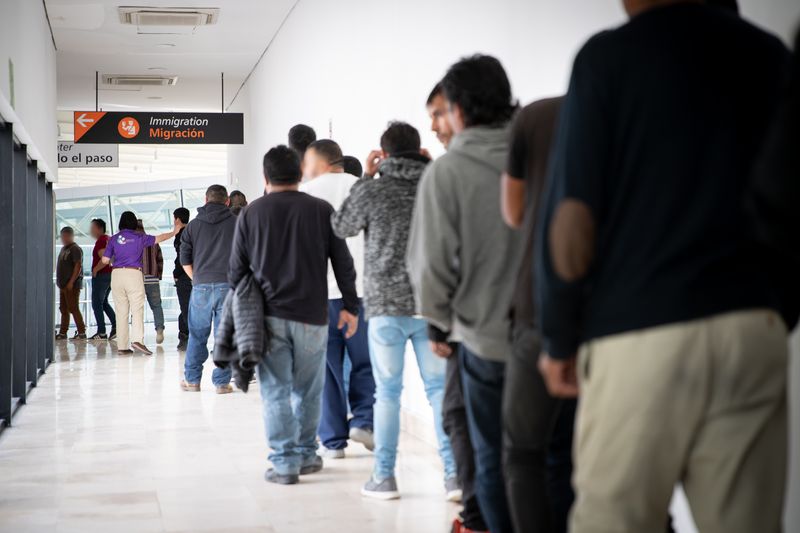
Inequality in accessing public services is prevalent worldwide. In the UK, “priority fees” for services like passport issuance or Schengen visas allow the affluent to expedite the process. In Brazil, the middle-class hires “despachantes” – intermediaries who navigate bureaucratic hurdles on their behalf. Add technology to the mix, and you get businesses like South Africa’s WeQ4U, which help the privileged sidestep the vehicle licensing queues that others endure daily. An African exception? Hardly. In the U.S., landlords use paid online services to expedite rental property licensing, while travelers pay annual fees for faster airport security screening.

If AI development continues and public sector services fail to evolve, inequalities in access will only grow.  AI agents – capable of handling tasks like forms filling and queries – have the potential to transform access to public services. But rather than embracing this potential, the public sector risks turning a blind eye – or worse, banning these tools outright – leaving those without resources even further behind.

The result? The private sector will have to navigate the gaps, finding ways to make AI agents work with rigid public systems. Often, this will mean operating in a legal grey zone, where the agents neither confirm nor deny they are software, masquerading as applicants themselves. Accountants routinely log into government tax portals using their clients’ credentials, acting as digital proxies without any formal delegation system. If human intermediaries are already “impersonating” their clients in government systems, it’s easy to envision AI agents seamlessly stepping into this role, automatically handling documentation and responses while operating under the same informal arrangements.

The high costs of developing reliable AI agents and the legal risks of operating in regulatory grey zones will require them to earn high returns, keep these tools firmly in the hands of the wealthier – replicating the same inequalities that define access to today’s analogue services. 

For those who can afford AI agents, life will become far more convenient. Their agents will handle everything from tax filings to medical appointments and permit applications. Meanwhile, the majority will remain stuck in endless queues, their time undervalued and wasted by outdated bureaucratic processes. Both groups, however, will lose faith in the public sector: the affluent will see it as archaic, while the underserved will face worsening service as the system fails to adapt.

The question is no longer whether AI agents will transform public services. They will. The partners of Y Combinator recently advised startup founders to “find the most boring, repetitive administrative work you can and automate it”. There is little work more boring and repetitive than public service management. The real question is whether this transformation will widen the existing divide or help bridge it. 

Banning AI agents outright is a mistake. Such an approach would amount to an admission of defeat, and entrenching inequalities by design. Instead, policymakers must take bold steps to ensure equitable access to AI agents in public services. Three measures could lay the groundwork:

  1. Establish an “AI Opportunities Agency”: This agency would focus on equitable uses of AI agents to alleviate bureaucratic burdens. Its mandate would be to harness AI’s potential to improve services while reducing inequality, rather than exacerbating it. This would be the analogue of the “AI Safety Agency”, itself also a necessary body. 
  2. Develop an “Agent Power of Attorney” framework: This framework would allow users to explicitly agree that agents on an approved list could sign digitally for them for a specified list of services. Such a digital power of attorney could improve on existing forms of legal representation by being more widely accessible, and having clearer and simpler means of delegating for specific scopes.
  3. Create a competitive ecosystem for AI agents: Governments could enable an open competition in which the state provides an option but holds no monopoly. Companies that provided agents which qualified for an approved list could be compensated by a publicly paid fixed fee tied to successful completions of service applications. That would create strong incentives for companies to compete to deliver higher and higher success rates for a wider and wider audience.

A public option for such agents should also be available from the beginning. If not, capture will likely result and be very difficult to reverse later. For example, the IRS’s Direct File, launched in 2024 to provide free tax filing for lower-income taxpayers, only emerged after years of resistance from tax preparation firms that had long blocked such efforts – and it continues to face strong pushback from these same firms.

One significant risk with our approach is that the approval process for AI agents could become outdated and inefficient, resulting in a roster of poorly functioning tools – a common fate in government, where approval processes often turn into bureaucratic roadblocks that stifle innovation rather than enable it.

In such a scenario, the affluent would inevitably turn to off-list agents provided by more agile startups, while ordinary citizens would view the initiative as yet another example of government mismanaging new technology. Conversely, an overly open approval process could allow bad actors to infiltrate the system, compromising digital signatures and eroding public trust in the framework.

These risks are real, but the status quo does nothing to address them. If anything, it leaves the door wide open for unregulated, exploitative actors to flood the market with potentially harmful solutions. Bad actors are already on the horizon, and their services will emerge whether governments act or not.

However, we are not starting from scratch when it comes to regulating such systems. The experience of open banking provides valuable lessons. In many countries, it is now standard practice for a curated list of authorized companies to request and receive permission to manage users’ financial accounts. This model of governance, which balances security and innovation, could serve as a blueprint for managing digital agents in public services. After all, granting permission for an agent to apply for a driver’s license or file a tax return involves similar risks to those we’ve already learned to manage in the financial sector.

The path ahead requires careful balance. We must embrace the efficiency gains of AI agents while ensuring these gains are democratically distributed. This means moving beyond the simple dichotomy of adoption versus rejection, toward a nuanced approach that considers how these tools can serve all citizens.

The alternative – a world of agents for the few, and queues for the many – would represent not just a failure of policy, but a betrayal of the fundamental promise of public services in a democratic society.

One of the best guides on civic tech (and when not to build it) is finally out

As the saying goes: “if you think technology is the solution, you don’t understand the problem”. The same goes for technologies for civic or public service purposes. In fact, many argue that a common trait of good professionals working in the digital space is their capacity to, whenever necessary, politely convince their counterparts that their new “app” idea sucks. 

Over time, practitioners will develop their own intuition and tricks of the trade to assess what should be built or not, and if so, how. That knowledge is mostly shared within networks of practitioners, sometimes through a few humorous tips, such as: “If building a dashboard is the first thing a government official asks you, run for your life!”

But this kind of tacit knowledge remains mostly contained and fragmented across small groups, and it is rarely translated for the benefit of others in an accessible manner. And these others are often the ones who come up either with the ideas, the money to fund the ideas, or both. 

This is why I’m particularly happy to see that Luke Jordan’s most recent work is finally out: Don’t Build It: A Guide For Practitioners In Civic Tech / Tech For Development. Currently at the MIT GOV/LAB, Luke is a seasoned technologist, also known for being very straight-to-the point when the issue is technology. Luke’s knowledge and communication style is nicely reflected through the content of the guide: dense, direct and sometimes amusing, as in the excerpt below:  

Construct a monstrous building in the middle of nowhere and movies might be made about you; build a pointless app that no one uses and you will just need to cite a misleading metric in a donor report and no one will care. Conversely, construct a good building in a sensible place and no one will think it worthy of notice; build a not-terrible app that people use for longer than the launch press release circulates, and you will immediately be nominated to half a dozen “X under X” lists.

So, by far the best method is to adopt a simple principle: Don’t build it.

When someone says, “We should build some tech for that”, just say no. When an investor or donor says, “Why don’t you build some technology”, just say no. When you read another article or see another TEDx talk about someone pretending their app achieved something, while citing numbers that are both unverified and meaningless, and a voice inside says, “why don’t we also build technology”, just say no.

Does that mean that the rest of this guide is pointless? Hopefully so. But in reality, at some point some idea may gather such momentum or such force of conviction that the “do not build it” ethos will start to falter. At that point, ask these questions…

I will stop here. In short, this guide is a must-read for anybody designing, implementing, funding or just coming up with “disruptive” ideas on technologies for civic engagement and public service delivery.

***

Ps.: The teaser for the guide, is itself priceless:

46 favorite reads on democracy, civic tech and a few other interesting things

open book lot

I’ve recently been exchanging with some friends on a list of favorite reads from 2020. While I started with a short list, it quickly grew: after all, despite the pandemic, there has been lots of interesting stuff published in the areas that I care about throughout the year. While the final list of reads varies in terms of subjects, breadth, depth and methodological rigor, I picked these 46 for different reasons. These include my personal judgement of their contribution to the field of democracy, or simply a belief that some of these texts deserve more attention than they currently receive. Others are in the list because I find them particularly surprising or amusing.

As the list is long – and probably at this length, unhelpful to my friends – I tried to divide it into three categories: i) participatory and deliberative democracy, ii) civic tech and digital democracy, and iii) and miscellaneous (which is not really a category, let alone a very helpful one, I know). In any case, many of the titles are indicative of what the text is about, which should make it easier to navigate through the list.

These caveats aside, below is the list of some of my favorite books and articles published in 2020:

Participatory and Deliberative Democracy

While I still plan to make a similar list for representative democracy, this section of the list is intentionally focused on democratic innovations, with a certain emphasis on citizens’ assemblies and deliberative modes of democracy. While this reflects my personal interests, it is also in part due to the recent surge of interest in citizens’ assemblies and other modes of deliberative democracy, and the academic production that followed.  

On Civic Tech and Digital Democracy

2020 was the year where the field of civic tech seemed to take a democratic turn, from fixing potholes to fixing democracy.

MISCELANEOUS

Finally, a section as random as 2020.

As mentioned before, the list is already too long. But if there’s anything anyone thinks should absolutely be on this list, please do let me know.

Digital Government: Minding the Empathy Gap*

Have you ever found yourself in a situation where you’re pulling on a door marked “pull” only to realize that you have to “push” to open it? These ubiquitous poorly designed doors are called “Norman doors” that both confuse and embarrass door openers. 

Online, certain experiences are not so different from physical Norman doors. Imagine that you are trying to accomplish a task online, such as requesting a service or paying a bill, but you just cannot understand what you have to do to get it done. It’s not your fault: you have just been victim of bad user experience (UX) design.

Government digital services are particularly prone to bad UX design – with users in some cases preferring to interact with government in-person  rather than having to go through even more cumbersome and unintelligible online  processes.

Less visible to the public, civil servants themselves are also victims: software developed to conduct simple and menial tasks are so poorly designed that training to use them is required. In the worst, and unfortunately common scenario, civil servants refuse to adopt a new piece of software, despite training that often substitutes for real change management to usable digital processes. And behind narratives of “resistance to change” and “poor ownership” of software, often hides poor UX design; something that cannot be solved by decrees or dollars alone. 

In the private sector, poor UX gets you out of business. In the public sector, exceptions apart, users are blamed for low uptake. But it doesn’t always have to be this way. 

Enter UX research and design

The term user experience was coined in 1993 by the famous cognitive psychologist and designer Don Norman, while conducting human interaction research and application at Apple Computers. As put by Norman, going beyond human-computer interaction, user experience covers “all aspects of the person’s experience with a system, including industrial design, graphics, the interface, the physical interaction, and the manual.”

In the private sector, the concept of user experience has been operationalized through user research. In general, the term user research refers to a continuous research process, that allows to learn about users and create services that increasingly meet their needs. Focusing on understanding users’ behaviors, needs, and motivations, user research employs a number of methods, such as card sorting task analysis, and usability testing. Companies like Google, Netflix and Airbnb take user research seriously, dedicating sizeable budgets to these activities. There are good reasons for this: research estimates that on average, every dollar invested in UX brings 100 in return , an ROI of 9,900%, with firms considering UX capacity “a matter of survival”.

A growing number of governments are starting to give UX research the attention that it deserves, such as the UK’s Government Digital Service United States Digital Service Unit, and Team Digitale in Italy, to cite a few. A smaller number of governments in lower- and middle-income countries are also starting to embrace this approach. For example, Argentina’s government created a new digital driving license, replacing physical cards with a digital document stored on users’ smartphones. Through a combination of user research and agile software development, the government delivered the new license in 65 days. In a similar vein, in Moldova, the combination of user research and process reengineering led to the elimination of several steps for parents’ enrollment in the country’s child care benefits program: workload for enrollment and processing benefits were reduced by 70%, dramatically reducing the time for benefits to reach the families.

Service design and the empathy gap

Studies by cognitive scientists and psychologists consistently reveal an empathy gap where decision-makers overestimate the similarity between what they value and what others value. Part of this effect stems from decision-makers’ natural incapacity to put themselves in someone else’s shoes. In this respect, one of the core functions of user research is precisely bridging this empathy gap, allowing the researcher to better capture the user’s perspective.

If by now user research should be a prerequisite for the design of any services, this is even more true for services in developing countries. This is so because, the more different the realities of two individuals, the larger the empathy gap between the two of them. This includes socio-economic background, including age, gender, ethnic background, or disabilities, as well as digital literacy. And all else equal, the less developed a country the less likely public services are designed by people who use them, or who share experiences that are closer to that of the end-users. In that case it is common to find, for instance, designers of public transport systems who use private drivers and health experts who never received treatment in a public hospital. The result are services built on a larger empathy gap, conceived by people whose frame of reference is even more distant from everyday users.

If governments are willing to deliver digital services that truly add value to their users, they will have to start paying significantly more attention to user research than they currently do. In practice, closing the empathy gap requires a number of steps that are worth highlighting. First, governments should be directly employing public servants who have skills in user research, combined with professionals with additional Internet-era skills such as digital design and agile project management. Second, governments should adopt a “users’ needs” first approach when prioritizing which services are digitized. That is, instead of relying on a checklist approach to ‘eServices’, governments let user research guide them on which services should be digitized. Finally, governments should abandon the number of services provided as a measure of success and instead, focus on the number of users who get services that are faster, cheaper and more efficient.

We are cognizant that for some government and development professionals, these three steps may be considered a tall ask. But that’s the only way forward if we want to avoid reproducing digital Norman doors, wasting resources and further frustrating public service users. 

*Co-authored with Kai Kaiser and Huong Thi Lan Tran, originally posted in the World Bank’s Governance for Development blog.