What shapes citizens’ evaluations of their public officials’ accountability? Evidence from local Ethiopia


I just came across an interesting paper by Sebastian Jilke published in Public Administration and Development. on the effects of access to information and participatory planning on citizens’ perception of local public officials. Below the summary of the paper:

In this article, we study which institutional factors shape citizens’ views of the local accountability of their public officials. Our departing assumption is that evaluations of local accountability do not merely reflect citizens’ political attitudes and beliefs, but also whether local institutions contribute to an environment of mutual trust, accountability and ultimately democratic legitimacy. Combining public opinion data from a large-N citizen survey (N=10,651) with contextual information for 63 local governments in Ethiopia, we look at access to information, participatory planning and the publicness of basic services as potential predictors of citizens’ evaluations of local public officials. Our findings suggest that local context matters. Jurisdictions that provide access to information on political decision-making are perceived to have more accountable officials. Moreover, when local governments provide public fora that facilitate citizens’ stakes in local planning processes, it positively affects citizens’ evaluations of the accountability of their officials. Our study adds to the  empirical literature by showing that establishing local institutions that can foster citizen-government relations at the local level through inclusive processes is crucial for improving public perceptions of accountability.

And a few more excerpts from the conclusion:

We have presented an empirical test of local institutional factors – particularly access to information,  participatory planning and publicness of basic services – and their impact on citizens’ perceptions of local accountability in Ethiopian local governments. Our empirical results show that two out of the three factors matter. Once a jurisdiction adopts participatory planning and/or provides access to information on political decision-making, it positively affects the way in which citizens perceive the accountability of their officials. In sum, both factors are thought to improve the relationship between citizens and their respective local governments. Hence, our findings suggest that establishing local institutions that can foster citizen-government relations at the local level are crucial for improving public attitudes towards local government. Furthermore, positive attitudes towards local government, furthermore, strengthen the democratic legitimacy of the state at the local level. Thus development practitioners and policy-makers may take these institutional factors into account when reforming local governments.

You can read an ungated version of the paper here [PDF].

And you can read more about the benefits of citizen participation here. 
Transparency & Trust: an Experimental Study of Online Disclosure

Washington-20130820-00261


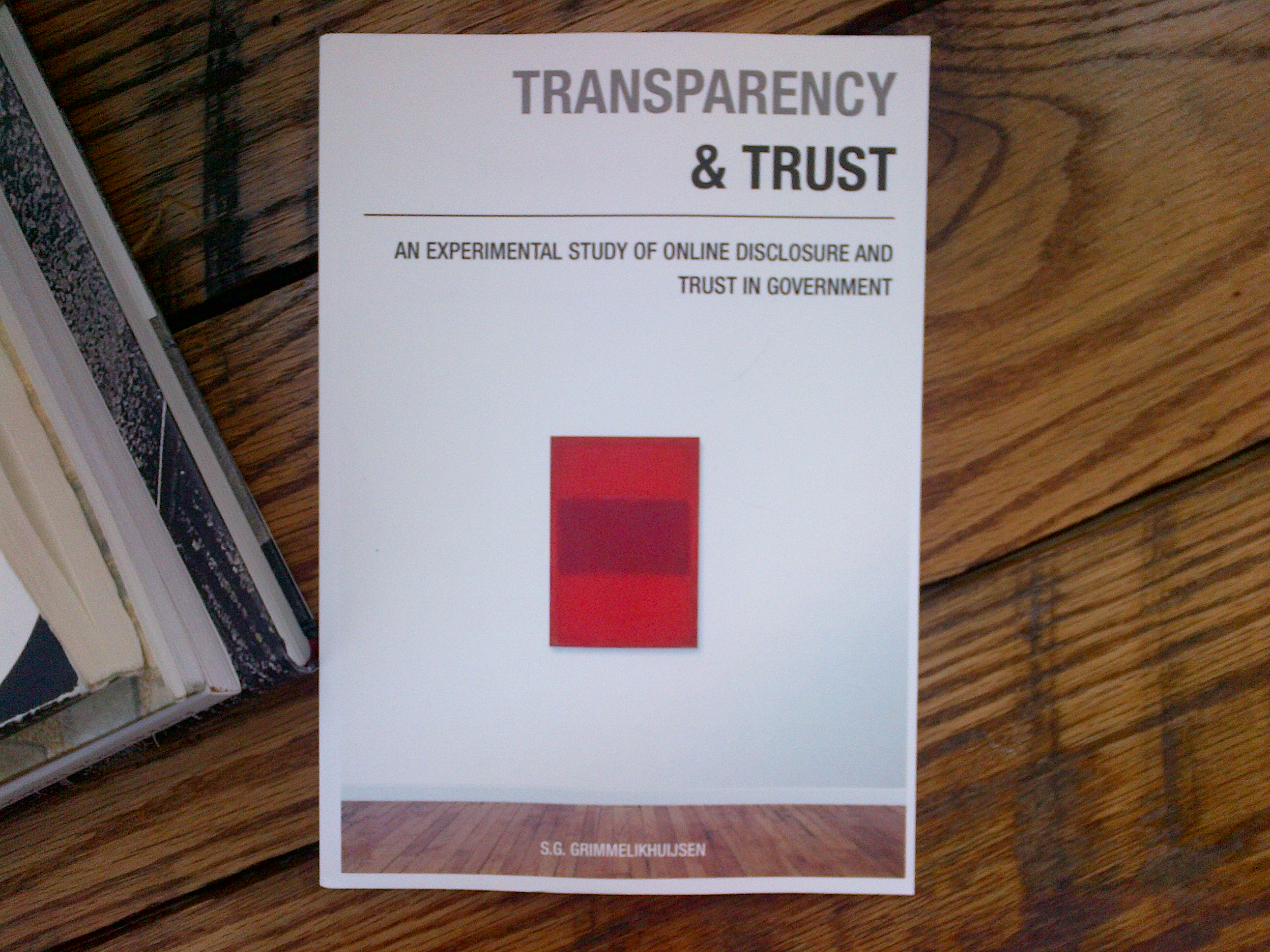
A big thank you to Stephan Grimmelikhuijsen for sending me two copies of his book overseas: Transparency and trust: an experimental study of online disclosure and trust in government. You can download a version of it (dissertation) here.

Stephan’s work is, in my opinion, extremely important reading for those working in the field of transparency and accountability.

As it turns out, whether we like it or not, claims that transparency leads to more trust are not supported by the existing evidence. Still not convinced? Read a short review of the evidence here.

Does transparency lead to trust? Some evidence on the subject.

As open government gains traction in the international agenda, it is increasingly common to come across statements that assume a causal relationship in which transparency leads to trust in government. But to what extent are claims that transparency leads to trust backed up by evidence?

Judging from some recent publications on the subject, such a relationship is not as straightforward as sadvocates would like. In fact, in a number of cases, the evidence points in another direction: that is, transparency may ultimately decrease trust.

Below is a brief overview of research that has been carried out on the subject:

Transparency has been trumpeted by many as the key to trust in government. The assumption is that if government organisations open up and show the public what decisions are made, how they are made and what the results are, people will automatically have more trust in government. But does transparency really lead to more trust? Or will it only provide critical citizens with more information to blame government again and again for small mistakes? Transparency and Trustexamines the effects of transparency on trust in a government organisation. By using an experimental method this study moves beyond normative or correlational research on transparency. In doing so, causal inferences regarding the relation between transparency and trust are allowed. Several objects of transparency and dimensions of information are being put to the test in three experiments. The experiments show that transparency is merely a ‘hygiene factor’: it does not contribute to higher levels of trust and it can even lead to lower levels of trust if people are disappointed with the degree to which government is transparent. This conclusion challenges current overly optimistic assumptions concerning the effect of transparency on trust.

Building on the notion of transparency as a strong democratic value and theories of procedural justice, this article reports an explorative experimental test whether transparency in decision making may lead to increased perceived legitimacy in terms of decision acceptance and trust. This is done in a context of difficult decisions of high importance for citizens – namely priority setting in public health care. An experiment was designed in which ordinary citizens were presented with a description of a case of priority setting between two groups with different health care needs. One group was given no information at all on the decision-making procedure, as an example of non-transparent decision making, and six groups were presented with different descriptions of the decision-making procedure, as examples of transparency in decision making. The transparent procedures were derived from three basic forms of democratic decision making: representation, direct participation and expert decision making. A second manipulation framed the decision-making procedure alternatively in positive or negative terms in order to capture media framing effects as well. According to the findings of the study, transparent decision-making procedures tend to weaken rather than strengthen general trust in health care – a finding that might reveal obstacles to attempts to strengthen the legitimacy of health care by employing transparent procedures. The results also show that while the form of decision making had no significant impact on perceived legitimacy, positive or negative framing of a decision-making procedure influences public perceptions of both the procedure and the decision outcome.

Of course, the impact of transparency on trust may vary according to the context:

 Transparency is considered a key value for trustworthy governments. However, the effect of transparency on citizens’ trust across national cultures is overlooked in current research. This article compares the effect of transparency on trust in government in the Netherlands and South Korea. The effect is investigated in two similar series of three experiments. The authors hypothesize that the effect of transparency differs because the countries have different cultural values regarding power distance and short- and long-term orientation. Results reveal similar patterns in both countries: transparency has a subdued and sometimes negative effect on trust in government. However, the negative effect in South Korea is much stronger. The difference in the magnitude of transparency’s effect suggests that national cultural values play a significant role in how people perceive and appreciate government transparency.

But some evidence goes even further, suggesting that transparency may have a demobilizing effect on citizens. And, if context matters, such a demobilizing effect might be particularly strong in the context of developing countries:

International organizations, policy experts, and nongovernmental organizations promote greater governmental transparency as a crucial reform to enhance accountability and curb corruption. Transparency is predicted to deter corruption in part by expanding the possibilities for public or societal accountability, that is, for citizens and citizens associations to monitor, scrutinize, and act to hold public office holders to account. Although the societal accountability mechanism linking transparency and good government is often implied, it builds on a number of assumptions seldom examined empirically. This article unpacks the assumptions of principal-agent theories of accountability and suggests that the logic of collective action can be used to understand why exposure of egregious and endemic corruption may instead demobilize the demos (i.e., resignation) rather than enhance accountability (i.e., indignation). We explore these theoretical contentions and examine how transparency affects three indicators of indignations versus resignation—institutional trust, political involvement, and political interest—given different levels of corruption. The empirical analyses confirm that an increase in transparency in highly corrupt countries tends to breed resignation rather than indignation.

Democratic theory often assumes that offering more information to voters will enhance electoral accountability. However, it is unclear whether corruption information translates into higher political participation and increased support for challengers. For example, information on corruption could lower the utility one gets from participating in elections at all. We provide experimental evidence that such information not only decreases incumbent support in local elections in Mexico, but also decreases voter turnout and challengers’ votes, as well as erodes partisan attachments. Our results suggest that while information clearly is necessary to improve accountability, corruption information is not necessarily suficient, since voters may respond to it by withdrawing from the political process.

Surely, transparency remains an essential – although quite insufficient – ingredient of accountability. On the trust issue, one could easily think of a number of scenarios in which it is actually better that citizens do not trust their governments. In fact, systems of checks and balances and oversight institutions are not specifically conceived under the logic of trust. Quite on the contrary, such institutional designs assume some level of suspicion vis-à-vis governments: as put in the Federalist Paper No. 51, “If angels were to govern men, neither external nor internal controls on government would be necessary.”

Granted, in some cases a perfect world in which citizens trust their governments may well be desirable. It may even be that transparency leads – in the long run – to increased trust: a great way to sell transparency to governments. But if we want to walk the talk of evidence-based policymaking, we may consider dropping the trust rhetoric. At least for now.

New Book on Open Parliaments

Brazilian House of Representatives

Cristiano Faria’s book on Open Parliaments has finally been translated from its original Portuguese to English. There are many reasons to read Cristiano’s piece, one of them being the scarcity of literature dealing with the usage of ICT by the legislative branch. I was honoured to be invited to write the preface to this book, in which I list a few other reasons why I think this book is very worthwhile reading. I have reproduced the preface below, with the addition of some hyperlinks.

***

Towards the end of the 18th Century, not long after the French Revolution, engineer Claude Chappe invented the optical telegraph. Also known as the Napoleonic Telegraph, this technological innovation enabled the transmission of messages over great distances at unprecedented speeds for its time. This novelty did not go unnoticed by the intellectuals of the period: the possibility of establishing a telegraph network that could connect individuals at high speed and lowered costs was seen as a unique opportunity for direct democracy to flourish.

The difficulties associated with direct democracy, so eloquently expressed by Rousseau just a few years earlier, no longer seemed relevant: simply opening the code used by the telegraph operators would suffice for a whirlpool of ideas to flow between citizens and government, bringing a new era of participatory decision-making. Events, however, took a different turn, and as time went by the enthusiasm for a democratic renewal faded away.

In the course of the centuries that followed, similar stories abounded. The emergence of each new ICT gave rise to a period of enthusiasm surrounding a renewal in politics and government, only to be followed by bitter disillusionment. While the causes of these historical experiences are multiple, it is safe to say that the failure of these technologies to deliver their much-heralded potential is underscored by a lack of understanding of the role of political institutions. These institutions are, inexorably, sources of obstacles and challenges that go beyond the reach of technological solutions.

Indeed, one could argue that despite the historical evidence, even today a certain amount of ingenuity permeates the majority of academic works in the domain of electronic democracy and open government, overestimating technological innovation and neglecting the role of institutions, actors, and their respective strategies.

Not falling prey to the techno-determinist temptation but rather carrying out an analysis grounded in institutions, organizational processes and actors’ strategies, is one of the many strengths of Cristiano Faria’s work. His experience as a civil servant in the Brazilian House of Representatives and his academic rigour bring together qualities that are rarely combined in the literature about the public sector. The result is a work that offers an unusual vision, taking into account a wide range of factors involved in processes of technological enactment and institutional innovation.

While underpinning the book as a whole, this encompassing perspective is most prominent in Chapters 4 and 5, in the case studies on the experiences from Brazil (e-Democracy) and Chile (Virtual Senator). Motivating factors, constraints, and institutional and organizational arrangements are brought to light. The reader encounters elements and processes that often go unperceived by even the most attentive observers and experienced academics.

For instance, while analysing the Brazilian case, Cristiano underscores the essential role played by legislative consultants in channelling citizens’ input into the formal decision-making processes of the House of Representatives. Only an individual who is viscerally familiar with the functioning of the public institutions in question is capable of such an insight – one of many throughout the book.

Even for this reason alone, this work is of inestimable value to the Brazilian and international literature in the fields of electronic democracy and open government. Numerous other characteristics, however, further add to its worth for researchers, politicians, civil servants and ordinary citizens with an interest in these subjects.

The object of study is relevant in itself. There is a disproportionate shortage of literature about the role of technologies with regard to the legislative branch. An incomplete understanding of how public institutions operate and interact among themselves has led an increasing number of academics and observers to focus their attention on the executive branch. Furthermore, in the limited literature that is available about the use of technologies by the legislative, the majority of studies are disappointingly superficial or excessively descriptive.

Cristiano’s text, although rich in detail, never loses sight of the major theoretical and normative perspectives that inform the state of the art in the electronic democracy debate. The literature that guides this piece is impeccable. This is a text that brings the reader into contact with the main theories and arguments relating to issues of transparency, participation, actors’ strategies, and processes of institutional and technological innovation.

Lastly, by presenting cases ranging from New Zealand to the Catalan Parliaments, this book has the inestimable worth of being a historical record, immune to temporal and technological changes. Cristiano Faria captures the state of the art in electronic democracy experiences in the legislative at the beginning of the 21st century. To ensure that the destiny of these experiences differs from that of the Napoleonic Telegraph, a realistic and perspicacious reflection is necessary, to which this book makes its contribution.

Infotopia – Unleashing the Democratic Power of Transparency

Archon Fung has just published a new paper in Politics & Society, “Infotopia: Unleashing the Democratic Power of Transparency”.

Abstract

In Infotopia, citizens enjoy a wide range of information about the organizations upon which they rely for the satisfaction of their vital interests. The provision of that information is governed by principles of democratic transparency. Democratic transparency both extends and critiques current enthusiasms about transparency. It urges us to conceptualize information politically, as a resource to turn the behavior of large organizations in socially beneficial ways. Transparency efforts have targets, and we should think of those targets as large organizations: public and civic, but especially private and corporate. Democratic transparency consists of four principles. First, information about the operations and actions of large organizations that affect citizens’ interests should be rich, deep, and readily available to the public. Second, the amount of available information should be proportionate to the extent to which those organizations jeopardize citizens’ interests. Third, information should be organized and provided in ways that are accessible to individuals and groups that use that information. Finally, the social, political, and economic structures of society should be organized in ways that allow individuals and groups to take action based on Infotopia’s public disclosures.

Read the full paper here [PDF] / ht Alex Howard.

Towards Open Government in Nepal

Screen Shot 2013-03-27 at 15.43.16

On March 28-29, 2011, Freedom Forum, in collaboration with the World Bank, organized Nepal’s first National Convention on the Right to Information in Kathmandu in an effort to draw high level attention to issues affecting implementation of the RTI law and to build broad consensus to strengthen the RTI regime. The convention brought together over 150 practitioners, including senior Government of Nepal officials, members of the Constituent Assembly, and civil society leaders. (…) These discussions were anchored in a series of thematic papers prepared for the Convention focusing on the challenges facing the NIC, public agencies, and information officers in implementing the new law; the role of the press, citizens, and local government in activating the demand for information across society; the legal regime governing the RTI particularly the classification and exemptions regime and the nature of the constitutional guarantee for RTI; and the role of RTI in curbing corruption and democratising political parties. These papers constitute the centre-piece of this volume

Read the full volume here [PDF].

Promise and Pitfalls of Targeted Transparency: A Light-handed Approach to Social Policy

The book “Full Disclosure” is a must read for anybody working with transparency policies.

In this brief new paper, the authors (David Weil, Archon Fung and Mary Graham) discuss the concept of targeted transparency, and shed light on how and when it works.

Targeted transparency represents a more focused approach to public information in which government compels companies or public service agencies to disclose information in standardized formats in order to reduce specific risks or improve services. Such policies are more light-handed than conventional regulation because they rely on the power of information rather than on enforcement of rules and standards or financial inducements to alter choices.

Targeted transparency is frequently used to introduce new scientific evidence of public risks into market choices. As targeted transparency takes a prominent place beside standard-setting and financial incentives as a tool of social policy, it becomes more important to understand when and how it works. Ineffective disclosure requirements can be costly. Forcing companies to collect and disclose information can require substantial resources. Mandated disclosure of incomplete or ou-tof-date information can mislead consumers and create new risks.

Read the full paper here [PDF]

In the video below you can watch a panel discussion on “Full Disclosure” at Harvard’s Kennedy School of Government on April 11, with Elena Fagotto, Archon Fung, Mary Graham, and David Weil.


Open Government and Democracy

The International Budget Partnership (IBP) has recently released the results of the Open Budget Survey 2012, which measures “the state of budget transparency, participation and oversight in 100 countries around the world”. In the survey report, the authors highlighted the positive relationship between budget transparency and democracy:

A democratic political system is a significant factor that supports budget transparency (…) In fact, a switch from autocracy to democracy is typically associated with an improvement in a country’s OBI score by almost 20 points, after controlling for other variables. In addition, transparency seems to depend much more on current levels of democracy than on how long a country has been a democracy: for countries in transition, this means that rapid improvements in transparency can be achieved without having to wait for slow processes of learning and adaptation.

This adds to a growing body of literature showing that democracies (and electoral competition) are indeed more transparent than other types of regime. If the relationship between democracy and openness comes across as obvious, it also opens space for some questions about the open government movement and its strategy to promote transparency.

Screen Shot 2013-03-07 at 00.42.12

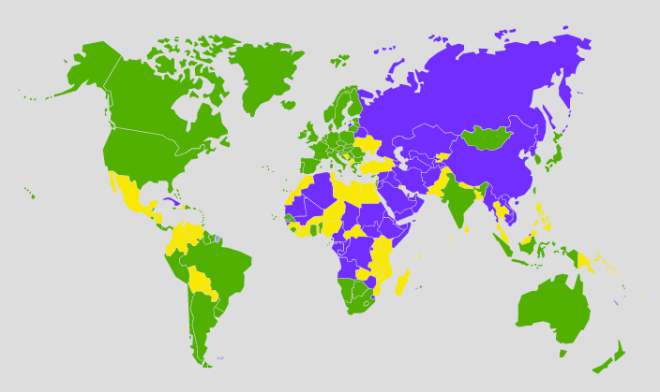
Political Rights and Civil Liberties in 2013 – Freedom House

Transparency, it seems, is one of the vital signs of well-functioning democracies. Chronic lack of transparency, on the other hand, emerges as the symptom of flawed democracies or authoritarian regimes. If this logic is correct (and the evidence suggests it is) advocating for transparency would correspond to treating the symptoms of a disease, rather than preventing it in the first place.

This is not to say that promoting transparency reforms (e.g. open data, open budgets) is a useless act. Treating a symptom is not a problem in itself: it alleviates the pain and may even prevent further complications. But neglecting to treat the cause of the symptom is surely a bad practice.

This begs a fundamental question: are open government advocates efficiently channelling their energy and resources when asking for more transparency from governments that have little or no inclination to democracy? Or are they failing to strike a balance which combines a focus on transparency with more fundamental reforms that promote, for instance, free, fair and competitive elections?

Granted, transparency and democracy are mutually reinforcing: it is difficult to think of a democracy without informed consent. And even well-established democracies still have a long way to go towards more transparency. But, for instance, going as far as considering that open government may blossom in non-democracies seems questionable to me. All the technology and transparency in the world is unlikely to realize its full potential in the absence of fundamental political rights and civil liberties.

It might be time to start focusing on the role that political regimes play in promoting values that are dear to the open government movement, such as transparency, participation and collaboration. And democracy – or lack thereof – is the elephant in the room.

***

Further reading

Alt, J. E., Lassen, D. D., & Rose, S. (2005). “The causes of fiscal transparency: Evidence from the US States.” IMF Staff Papers, 53(Special Issue), 30–57.

Alt, J. E., & Lowry, R. C. (2010). “Transparency and accountability: Empirical results for US States.” Journal of Theoretical Politics, 22(4), 379–406.

Hollyer, J. R., Rosendorff, B. P., & Vreeland, J. R. (2011). “Democracy and transparency.” Journal of Politics, 73(4), 1191–1205.

Rosendorff, B. Peter, and James Raymond Vreeland. (2004). “Democracy and Data Dissemination: The Effect of Political Regime on Transparency.” Working Paper, Yale. 

Rosendorff, B. Peter and Doces, John A. (2006). “Democracy and Transparency”. Swiss Political Science Review, 12 (3), 99-112.

Wehner, J. and de Renzio, P. (2013) “Citizens, Legislators, and Executive Disclosure: The Political Determinants of Fiscal Transparency.” World Development, 41, 96-108.

High-Frequency Data Using Mobile Phones: Incentives and Accountability

Great research note  [PDF] by Croke et al. (2012). Here’s the abstract:

As mobile phone ownership rates have risen dramatically in Africa, there has been increased interest in using mobile telephones as a data collection platform. This note draws on two largely successful pilot projects in Tanzania and South Sudan that used mobile phones for high-frequency data collection. Data were collected on a wide range of topics and in a manner that was cost-effective, flexible, and rapid. Once households were included in the survey, they tended to stick with it: respondent fatigue has not been a major issue. While attrition and nonresponse have been challenges in the Tanzania survey, these were due to design flaws in that particular survey, challenges that can be avoided in future similar projects. Ensuring use of the data to demand better service delivery and policy decisions turned out to be as challenging as collecting the high-quality data. Experiences in Tanzania suggest that good data can be translated into public accountability, but also demonstrate that just putting data out in the public domain is not enough. This note discusses lessons learned and offers suggestions for future applications of mobile phone surveys in developing countries, such as those planned for the World Bank’s “Listening to Africa” initiative.

Of particular interest to me is the fact that part of the design used financial incentives as a means to reduce nonresponse and attrition rates. In the technology and development world there has been lots of talk about “incentives to participate”, where the practical shortcut is often the provision of financial incentives. In Tanzania, for instance, the authors report that “respondents who successfully completed an interview were rewarded with an amount varying from $2 to $4”, not a negligible sum in the Tanzanian context.

Interestingly, in the working paper [PDF] from which this note is drawn, a footnote sheds some light on how effective these rewards were:

Remarkably in both Sudan and Tanzania the amount of the reward did not have a discernable impact on response rates.

But these findings are not as surprising as they may seem. Indeed, there is a good deal of evidence from behavioural economics pointing out that financial incentives might not work as well as traditional economics (and economists) would predict.

And a noteworthy excerpt on the limits of transparency and the role of existing institutions and actors:

One lesson is that  providing citizens with relevant, timely, and accurate data  about the actions of politicians, policy makers, and public service providers is not sufficient. For the data to have impact, they need to be accessible and disseminated widely, and in ways that allow them to be utilized by already existing institutions and actors.

This is an interesting point, although I am not sure to what extent existing institutions are enough. In the field of technology and governance, I believe that it has become quite clear that very little is achieved when technological solutions are not coupled with institutional innovations.

But that’s another story. In any case, a great read, and the type of effort that is badly needed in this space.

Corruption and the Limits of Electoral Accountability

Picture by watchsmart on flickr.

Interesting new paper looking at electoral accountability in 74 countries

Corruption and Accountability: “Throwing the Bums Out” Does Not Work.

By Crisp, Potter, Olivella and Mishler (November 2012)

Abstract

Many theories of democracy stress the concept of accountability. Voters reward or punish elected ocials by extending or ending their political careers. Seeking the long-term reward of reelection, officials avoid the short-term benefits of corruption that would put them at risk of early electoral defeat. This good behavior, in turn, leads to voter loyalty and reelection. Previous studies of electoral volatility and political corruption, however, have not tested this reciprocal relationship with an appropriate empirical model. In this paper, we employ a bivariate normal model to assess the effects of malfeasance on voter loyalty and, conversely, of voter defection on subsequent malfeasance. We test these relationships on data drawn from 249 elections across 74 countries. Our results show that malfeasance does indeed provoke voter defection, but that electoral volatility is not followed by lower levels of perceived corruption. We discuss the importance of these novel results for the emerging literature on clarity of responsibility.

Some excerpts from the conclusion (highlights are mine):

According to the standard theory, voters hold elected ocials accountable for their performance in oce by voting out of office anyone suspected of corrupt behavior. This presumably purges government of the worst officials, reminds continuing representatives of the voters’ power, and signals to newly elected officials that they ought to behave more virtuously than their predecessors. The empirical evidence we have reported is reassuring of the standard model in only one respect. It clearly shows that voters respond appropriately to perceived corruption by throwing legislators out of office. Nevertheless, the observation that increasing volatility does not reduce perceived corruption undermines a central assumption of retrospective accountability theory: namely, that the replacement of corrupt officials creates a virtuous cycle where corruption and volatility are mutually reinforcing and spiral ever lower in tandem with one another.

The absence of any impact of volatility on perceived corruption means either that legislators do not alter their behavior in the short run in response to the signal provided by vote volatility, or that politicians do respond, but their change in behavior is not immediately perceived by voters who continue to punish newly elected legislators for the sins of their predecessors. Distinguishing between these possibilities, empirically, requires data on actual legislative corruption, which is not available. Nevertheless, weighing the two scenarios, in our estimation the second seems more plausible. In our data set, voter perceptions of legislative corruption appear highly viscous in that they do not vary much over time. Corruption is covert and hard for voters to recognize. When they do perceive corruption, voters respond appropriately by throwing the bums out of oce. But because corruption is covert, it is equally dicult for voters to know if newly elected legislators are really better behaved or whether the corruption of new members simply has not yet been exposed.

In the absence of visible evidence to the contrary, voters have no reason to update their perceptions and treat the new legislators any differently than the old ones. Rather than creating a virtuous cycle, this creates instead a low-level equilibrium trap. Voter perceptions of corruption give rise to higher levels of volatility, but because higher volatility has no systematic impact on subsequent perceptions of corruption, continuing perceptions of corruption are likely to sustain those higher levels of volatility, thereby threatening the re-election prospects of newly elected legislators regardless of their behavior. Our inability to find an effect of vote volatility on corruption by distinguishing quality democracies from low-grade ones (with an interaction with the country’s Polity score) lends support to the idea that the failure of punishment to alter (perceptions of) corruption is not limited to some subset of delegative, authoritarian, or otherwised adjective-laden set of democracies.

Putting these findings in the broader context of the open government agenda, I can’t help but wonder about the limits of transparency in the absence of additional accountability mechanisms.

Read the full paper here [PDF].