Open Government and Democracy

The International Budget Partnership (IBP) has recently released the results of the Open Budget Survey 2012, which measures “the state of budget transparency, participation and oversight in 100 countries around the world”. In the survey report, the authors highlighted the positive relationship between budget transparency and democracy:

A democratic political system is a significant factor that supports budget transparency (…) In fact, a switch from autocracy to democracy is typically associated with an improvement in a country’s OBI score by almost 20 points, after controlling for other variables. In addition, transparency seems to depend much more on current levels of democracy than on how long a country has been a democracy: for countries in transition, this means that rapid improvements in transparency can be achieved without having to wait for slow processes of learning and adaptation.

This adds to a growing body of literature showing that democracies (and electoral competition) are indeed more transparent than other types of regime. If the relationship between democracy and openness comes across as obvious, it also opens space for some questions about the open government movement and its strategy to promote transparency.
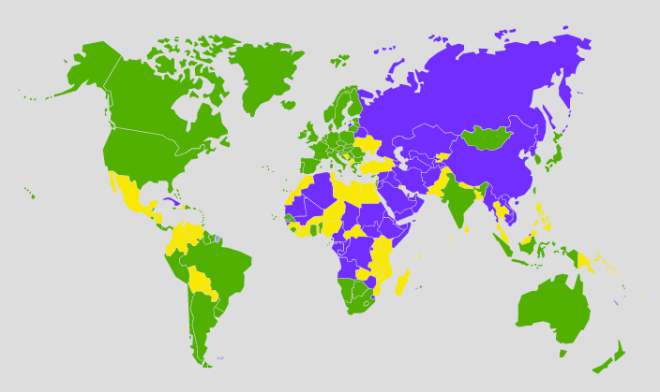
Screen Shot 2013-03-07 at 00.42.12

Political Rights and Civil Liberties in 2013 – Freedom House

Transparency, it seems, is one of the vital signs of well-functioning democracies. Chronic lack of transparency, on the other hand, emerges as the symptom of flawed democracies or authoritarian regimes. If this logic is correct (and the evidence suggests it is) advocating for transparency would correspond to treating the symptoms of a disease, rather than preventing it in the first place.

This is not to say that promoting transparency reforms (e.g. open data, open budgets) is a useless act. Treating a symptom is not a problem in itself: it alleviates the pain and may even prevent further complications. But neglecting to treat the cause of the symptom is surely a bad practice.

This begs a fundamental question: are open government advocates efficiently channelling their energy and resources when asking for more transparency from governments that have little or no inclination to democracy? Or are they failing to strike a balance which combines a focus on transparency with more fundamental reforms that promote, for instance, free, fair and competitive elections?

Granted, transparency and democracy are mutually reinforcing: it is difficult to think of a democracy without informed consent. And even well-established democracies still have a long way to go towards more transparency. But, for instance, going as far as considering that open government may blossom in non-democracies seems questionable to me. All the technology and transparency in the world is unlikely to realize its full potential in the absence of fundamental political rights and civil liberties.

It might be time to start focusing on the role that political regimes play in promoting values that are dear to the open government movement, such as transparency, participation and collaboration. And democracy – or lack thereof – is the elephant in the room.

***

Further reading

Alt, J. E., Lassen, D. D., & Rose, S. (2005). “The causes of fiscal transparency: Evidence from the US States.” IMF Staff Papers, 53(Special Issue), 30–57.

Alt, J. E., & Lowry, R. C. (2010). “Transparency and accountability: Empirical results for US States.” Journal of Theoretical Politics, 22(4), 379–406.

Hollyer, J. R., Rosendorff, B. P., & Vreeland, J. R. (2011). “Democracy and transparency.” Journal of Politics, 73(4), 1191–1205.

Rosendorff, B. Peter, and James Raymond Vreeland. (2004). “Democracy and Data Dissemination: The Effect of Political Regime on Transparency.” Working Paper, Yale. 

Rosendorff, B. Peter and Doces, John A. (2006). “Democracy and Transparency”. Swiss Political Science Review, 12 (3), 99-112.

Wehner, J. and de Renzio, P. (2013) “Citizens, Legislators, and Executive Disclosure: The Political Determinants of Fiscal Transparency.” World Development, 41, 96-108.

Unequal Participation: Open Government’s Unresolved Dilemma

( cross-posted from techPresident)

In my frequent conversations about open government and citizen participation, the subject of elite capture (or “how representative it is”) is almost unavoidable. Some go as far as evaluating participatory initiatives on the grounds of an ideal notion of representativeness: participants should perfectly mirror the socio-demographic traits of the larger population from which they come.

But oddly enough, the same people who raise these concerns about participatory initiatives are much less inclined to apply the same reasoning and standards to traditional politics. In other words, few take the time to consider how representative and inclusive existing electoral democracy actually is. An article by Nicholas Carnes at the New York Times about political representation in the United States puts the issue into perspective:

If millionaires were a political party, that party would make up roughly 3 percent of American families, but it would have a super-majority in the Senate, a majority in the House, a majority on the Supreme Court and a man in the White House. If working-class Americans were a political party, that party would have made up more than half the country since the start of the 20th century. But legislators from that party (those who last worked in blue-collar jobs before entering politics) would never have held more than 2 percent of the seats in Congress.

I’ve yet to see a participatory process that produces similar results. But the limits of representation do not stop there. African Americans and Latinos are still greatly under-represented in US politics. The gender issue is no different: with the House of Representatives only 17 percent women, the Inter Parliamentary Union ranks the US 82nd in female representation in politics, behind countries such as the Arab Emirates, Sudan, Mauritania and Kazakhstan.

Obviously, the US is by no means exceptional in exclusion. Those working in the field of political participation have long been aware of the excluding effect of representative systems. As put by political scientist Arend Lijphart, unequal participation remains as representative democracy’s “unresolved dilemma.” Even more unfortunately, underlines Lijphart, inequalities in representation and influence “are not randomly distributed, but systematically biased in favor of more privileged citizens (…) and against less advantaged citizens”.

And it is from this unresolved dilemma that the raison d’être of participatory innovations stems. But rather than a replacement for representative systems (as misunderstood by some), participatory innovations are complementary mechanisms to enable the participation of individuals who are systematically excluded from traditional politics, ultimately increasing the overall diversity of voices that influence government.

This observation leads to a fundamental issue when assessing citizen participation initiatives: beyond questioning demographic representativeness, one must also consider the extent to which initiatives succeed (or not) in promoting the participation of previously marginalized sectors of society (i.e. inclusiveness).

So how inclusive are these mechanisms?

To continue with the US example, let’s consider one of the most exciting open government events taking place at the local level in the US: the recent adoption of participatory budgeting in NYC. Unlike most overhyped #opengov experiences, a team of researchers carried out an evaluation of the experience looking at, among other things, the extent to which it promoted inclusiveness. Below are some excerpts from the report [PDF]:

  • Twenty percent of PB voters identified themselves as African American; 14 percent as Hispanic or Latino/a; 2 percent as Asian and 2 percent as “Other.”
  • A higher percentage of African Americans participated in neighborhood assemblies (38 percent), compared to the full population in the four districts (31 percent).
  • Twenty-one percent of budget delegates and 19 percent of PB voters were born outside of the United States.
  • Participants that identified themselves as Black/African American were the most likely to volunteer to be budget delegates.
  • Women represented 64 percent of neighborhood assembly participants, 65 percent of budget delegates and 62 percent of voters in the PB process.

But how these numbers compare with participation in traditional politics is probably one of the highlights of the evaluation (emphasis is mine):

One of the most striking findings about who participated in PB [participatory budgeting] is how the data compares to other types of civic engagement, particularly voting patterns in NYC elections. Across the districts, PB engaged communities that have traditionally been uninspired by politics. People of color, low-income people and some immigrant groups turned out at higher rates than in previous elections.

A few numbers worth noting:

Latino/as represented 39 percent of voters in the 2009 City Council elections. However, 50 percent of PB voters identified themselves as Latino/a (District 8 NYC).

Black or African Americans represented 79 percent of voters in 2009 City Council elections. However, 87 percent of the district’s PB voters identified themselves as Black or African American (District 45 NYC).

Twenty-two percent of PB voters had a household income of less than $10,000 compared to 4 percent of the district’s voters in the 2009 City Council election (District 8 NYC).

I have very little doubt, if any, that the contrast would be even starker if we compared the income of those who sit on the City Council and those who participated in the NYC participatory budgeting. In City Councils across the US, less than 10 percent of members come from a blue-collar background. Conversely, the numbers on income of participatory budgeting participants speak for themselves.

As citizen engagement gains traction in the open government agenda, inclusiveness should be one of the top priorities: both from normative and empirical standpoints, more inclusive initiatives are likely to produce better outcomes. The NYC experience provides valuable lessons for donors, policymakers, advocates, and enthusiasts alike. They can find more about it here and here.

Can Informed Public Deliberation Overcome Clientelism? Experimental Evidence from Benin

picture by geezaweezer on flickr

Brilliant paper by Leonard Wantchekon

This paper provides experimental evidence on the effect of “informed” town hall meetings on electoral support for programmatic, non-clientelist platforms. The experiment takes place in Benin and involves real candidates running in the first round of the 2006 presidential elections. The treatment is a campaign strategy based exclusively on town hall meetings during which policy proposals made by candidates are “specific” and informed by empirical research. The control is the “standard” strategy based on campaign rallies followed by targeted or clientelist electoral promises. We find that the treatment has a positive effect on self-perceived knowledge about policies and candidates. The data also suggests a positive effect of the treatment on turnout and electoral support for the candidates participating in the experiment. The results suggest that new democracies may contain electoral clientelism by institutionalizing the use of both town hall meetings in electoral campaigns and policy expertise in the design of electoral platforms.

Read the full paper here [PDF]

Argentina: Does Electoral Accountability Make a Difference?

picture by Andrea Jara S on Flickr

Does Electoral Accountability Make a Difference? Direct Elections, Career Ambition, and Legislative Performance in the Argentine Senate

By Juan Pablo Micozzi

The Journal of Politics, Vol. 75, No. 1, January 2013

Studies analyzing the American Congress demonstrate that senators’ attention towards voters substantially increased after the 17 th Amendment to the U.S. Constitution, which replaced their indirect appointment with direct election. Even though this finding seems useful for theoretical generalizations, expectations become unclear as concerns about career perspectives differ. Should politicians with non-static ambition shift their attention towards voters if they do not expect reelection? Making use of a quasi-experimental setting, I analyze the impact of the shift from indirect to direct election to select the members of the Argentine Senate. I develop an argument for why, in spite of the lack of systematic pursuit of reelection, elected senators have incentives to be more oriented towards voters. Through the analysis of about 55,000 bills, I evaluate senatorial behavior under both sources of legitimacy. The findings support the idea that audience costs make a difference in behavior, regardless of short-term career expectations.

Read full paper here.

High-Frequency Data Using Mobile Phones: Incentives and Accountability

Great research note  [PDF] by Croke et al. (2012). Here’s the abstract:

As mobile phone ownership rates have risen dramatically in Africa, there has been increased interest in using mobile telephones as a data collection platform. This note draws on two largely successful pilot projects in Tanzania and South Sudan that used mobile phones for high-frequency data collection. Data were collected on a wide range of topics and in a manner that was cost-effective, flexible, and rapid. Once households were included in the survey, they tended to stick with it: respondent fatigue has not been a major issue. While attrition and nonresponse have been challenges in the Tanzania survey, these were due to design flaws in that particular survey, challenges that can be avoided in future similar projects. Ensuring use of the data to demand better service delivery and policy decisions turned out to be as challenging as collecting the high-quality data. Experiences in Tanzania suggest that good data can be translated into public accountability, but also demonstrate that just putting data out in the public domain is not enough. This note discusses lessons learned and offers suggestions for future applications of mobile phone surveys in developing countries, such as those planned for the World Bank’s “Listening to Africa” initiative.

Of particular interest to me is the fact that part of the design used financial incentives as a means to reduce nonresponse and attrition rates. In the technology and development world there has been lots of talk about “incentives to participate”, where the practical shortcut is often the provision of financial incentives. In Tanzania, for instance, the authors report that “respondents who successfully completed an interview were rewarded with an amount varying from $2 to $4”, not a negligible sum in the Tanzanian context.

Interestingly, in the working paper [PDF] from which this note is drawn, a footnote sheds some light on how effective these rewards were:

Remarkably in both Sudan and Tanzania the amount of the reward did not have a discernable impact on response rates.

But these findings are not as surprising as they may seem. Indeed, there is a good deal of evidence from behavioural economics pointing out that financial incentives might not work as well as traditional economics (and economists) would predict.

And a noteworthy excerpt on the limits of transparency and the role of existing institutions and actors:

One lesson is that  providing citizens with relevant, timely, and accurate data  about the actions of politicians, policy makers, and public service providers is not sufficient. For the data to have impact, they need to be accessible and disseminated widely, and in ways that allow them to be utilized by already existing institutions and actors.

This is an interesting point, although I am not sure to what extent existing institutions are enough. In the field of technology and governance, I believe that it has become quite clear that very little is achieved when technological solutions are not coupled with institutional innovations.

But that’s another story. In any case, a great read, and the type of effort that is badly needed in this space.

My Reading Suggestions (Part One)

Fundação Biblioteca Nacional

Tom Steinberg asked me for a list of my favorite recent reads. So here’s the first part of a rather disorganized list of readings and other resources, with sporadic comments on why I like some of them. The list is heterogeneous in terms of subject, method and quality. In my opinion, the common denominator among the different resources is their relevance for those working at the intersection of participation and technology.

ON COLLECTIVE INTELLIGENCE

There is definitely a lot of bad reading out there about collective intelligence.   Indeed, many of the discussions and papers out there are nothing more than half-baked re-readings of ideas and concepts well established in the field of epistemic democracy. But there are a few exceptions. Acquainting myself with Hélène’s awesome work in the domain was one of the highlights for me in 2012. Here’s a sample:

Landemore, Hélène E., Democratic Reason: The Mechanisms of Collective Intelligence in Politics (April 1, 2011). COLLECTIVE WISDOM: PRINCIPLES AND MECHANISMS, Hélène Landemore and Jon Elster, eds., Cambridge University Press, Spring 2012.

You can find more of Hélène’s work here http://www.helenelandemore.com/.

Also, if you are interested in high-level talks and discussions about collective intelligence, the videos of conferences below are some of the best things out there:

Collective Intelligence Conference (Video)

College de France – Collective Intelligence (Video) 

Epistemic Democracy Conference (Video) 

ON COLLECTIVE ACTION

Miller, J & Page, S 2004, ‘The Standing Ovation Problem’, COMPLEXITY, vol. 9, no. 5, pp. 8-16.

Bond, R. M., C. J. Fariss, J. J. Jones, A. D. I. Kramer, C. Marlow, J. E. Settle, and J. H. Fowler.  2012. “A 61-Million-Person Experiment in Social Influence and Political Mobilization.”  Nature 489: 295–298.

S. Gonzalez-Bailon, J. Borge-Holthoefer, A. Rivero, and Y. Moreno. The Dynamics of Protest Recruitment through an Online Network. Nature, December 2011.

Margetts, Helen Zerlina, John, Peter, Reissfelder, Stephane and Hale, Scott A., Social Influence and Collective Action: An Experiment Investigating the Effects of Visibility and Social Information Moderated by Personality (April 18, 2012).  

Hale, Scott A. and Margetts, Helen Zerlina, Understanding the Mechanics of Online Collective Action Using ‘Big Data’ (March 22, 2012).

ON DELIBERATION

David Lazer is the co-author of two of these papers. If you don’t know it already, Stuart Shulman’s work is definitely worth checking out. Thamy Pogrebinschi is probably one of the people to look out for in the coming years in the field of participatory democracy.

Lazer, David, Sokhey, Anand E., Neblo, Michael A. and Esterling, Kevin M., Deliberative Ripples: The Network Effects of Political Events (August 10, 2010).

Neblo, Michael A., Esterling, Kevin M., Kennedy, Ryan, Lazer, David and Sokhey, Anand E., Who Wants to Deliberate – and Why? (September 15, 2009). HKS Working Paper No. RWP09-027.

Stuart W. Shulman, 2009. “The case against mass e–mails: Perverse incentives and low quality public participation in U.S. federal rulemaking,” Policy & Internet, volume 1, number 1, article 2.

Pogrebinschi, Thamy, The Squared Circle of Participatory Democracy: Scaling-up Deliberation to the National Level (2012). APSA 2012 Annual Meeting Paper. 

THE ROI OF CITIZEN ENGAGEMENT:

Largely unknown even among the most enthusiastic participation advocates, there is a growing body of literature in the field of tax morale that links citizen engagement to reduced tax evasion: one of the best cases for the ROI of Open Government.  Below is one of the best papers in the field.

Frey, Bruno S., and Lars P. Feld (2002) “Deterrence and Morale in Taxation: An Empirical Analysis.” CESifo Working Paper no. 760, August 2002

You can find more references about tax morale here. Alex Howard gives a good account of how this might be happening in the DR Congo, helped by mobile phones (a project I’m part of).

And if the subject is the ROI of open government, here’s a paper that links participatory budgeting to reduced infant mortality (and there’s more to be published on that front soon).

RANDOMIZED CONTROLLED TRIALS AND OPEN GOVERNMENT

If I were to make any predictions for 2013, I would say we will start to see a growing number of studies using randomized controlled trials (RCTs) to assess the validity of claims for transparency and participation. Indeed, some donors in the open government space have already started to ask for RCT evaluations as a project component. Here are a couple of examples of how good studies on the subject would look (IMHO):

Olken, B. 2010. Direct Democracy and Local Public Goods: Evidence from a Field Experiment in Indonesia. American Political Science Review, 104, pp 243-267

Zhang, K. 2012. “Increasing Citizen Demand for Good Government in Kenya”. Stanford University. 

Of course, scholars, practitioners and donors should take claims about the awesomeness of RCTs with a good grain of salt (and pepper):

Deaton, A. 2008. Instruments of development? Randomization in the tropics, and the hunt for the keys to development. Princeton University mimeo.

Cartwright, N. 2007. “Are RCTs the gold standard?” Biosocieties, 2, 11–20.

FUN STUFF ON TURNOUT AND ELECTIONS

Rothschild, David and Justin Wolfers. 2011. “Forecasting Elections: Voter Intentions versus Expectations.” Working paper, University of Pennsylvania.

Gomez, Brad T., Thomas G. Hansford, and George A. Krause. 2007. “The Republicans Should Pray for Rain: Weather, Turnout, and Voting in U.S. Presidential Elections.” Journal of Politics 69 (August): 649–63.

This is just the first part of a longer list. I hope to finish a second part soon, focusing – among other things – on the (uneasy) intersection of behavioural economics and participatory democracy.

Happy reading.

13 New Articles on Participatory Budgeting

A band inaugurates a public work selected through participatory budgeting in Brazil (picture by Prefeitura de Olinda on Flickr).

The new issue of the Journal of Public Deliberation (Volume 8, Issue 2 – 2012) presents 13 new articles on participatory budgeting. Edited by Janette Hartz-Karpz (Curtin University) and Brian Wampler (Boise State University) “This special issue of the Journal of Public Deliberation brings together leading scholars expand our conceptual tools to understand why PB programs are being adopted, how governments are adapting the rules and principles to meet different policy and political goals, and the impact of PB on civil society, state reform, and social well-being.”

Below links to the articles:

Transnational Models of Citizen Participation: The Case of Participatory Budgeting
Yves Sintomer, Carsten Herzberg, Anja Röcke, and Giovanni Allegretti

Corruption and the Limits of Electoral Accountability

Picture by watchsmart on flickr.

Interesting new paper looking at electoral accountability in 74 countries

Corruption and Accountability: “Throwing the Bums Out” Does Not Work.

By Crisp, Potter, Olivella and Mishler (November 2012)

Abstract

Many theories of democracy stress the concept of accountability. Voters reward or punish elected ocials by extending or ending their political careers. Seeking the long-term reward of reelection, officials avoid the short-term benefits of corruption that would put them at risk of early electoral defeat. This good behavior, in turn, leads to voter loyalty and reelection. Previous studies of electoral volatility and political corruption, however, have not tested this reciprocal relationship with an appropriate empirical model. In this paper, we employ a bivariate normal model to assess the effects of malfeasance on voter loyalty and, conversely, of voter defection on subsequent malfeasance. We test these relationships on data drawn from 249 elections across 74 countries. Our results show that malfeasance does indeed provoke voter defection, but that electoral volatility is not followed by lower levels of perceived corruption. We discuss the importance of these novel results for the emerging literature on clarity of responsibility.

Some excerpts from the conclusion (highlights are mine):

According to the standard theory, voters hold elected ocials accountable for their performance in oce by voting out of office anyone suspected of corrupt behavior. This presumably purges government of the worst officials, reminds continuing representatives of the voters’ power, and signals to newly elected officials that they ought to behave more virtuously than their predecessors. The empirical evidence we have reported is reassuring of the standard model in only one respect. It clearly shows that voters respond appropriately to perceived corruption by throwing legislators out of office. Nevertheless, the observation that increasing volatility does not reduce perceived corruption undermines a central assumption of retrospective accountability theory: namely, that the replacement of corrupt officials creates a virtuous cycle where corruption and volatility are mutually reinforcing and spiral ever lower in tandem with one another.

The absence of any impact of volatility on perceived corruption means either that legislators do not alter their behavior in the short run in response to the signal provided by vote volatility, or that politicians do respond, but their change in behavior is not immediately perceived by voters who continue to punish newly elected legislators for the sins of their predecessors. Distinguishing between these possibilities, empirically, requires data on actual legislative corruption, which is not available. Nevertheless, weighing the two scenarios, in our estimation the second seems more plausible. In our data set, voter perceptions of legislative corruption appear highly viscous in that they do not vary much over time. Corruption is covert and hard for voters to recognize. When they do perceive corruption, voters respond appropriately by throwing the bums out of oce. But because corruption is covert, it is equally dicult for voters to know if newly elected legislators are really better behaved or whether the corruption of new members simply has not yet been exposed.

In the absence of visible evidence to the contrary, voters have no reason to update their perceptions and treat the new legislators any differently than the old ones. Rather than creating a virtuous cycle, this creates instead a low-level equilibrium trap. Voter perceptions of corruption give rise to higher levels of volatility, but because higher volatility has no systematic impact on subsequent perceptions of corruption, continuing perceptions of corruption are likely to sustain those higher levels of volatility, thereby threatening the re-election prospects of newly elected legislators regardless of their behavior. Our inability to find an effect of vote volatility on corruption by distinguishing quality democracies from low-grade ones (with an interaction with the country’s Polity score) lends support to the idea that the failure of punishment to alter (perceptions of) corruption is not limited to some subset of delegative, authoritarian, or otherwised adjective-laden set of democracies.

Putting these findings in the broader context of the open government agenda, I can’t help but wonder about the limits of transparency in the absence of additional accountability mechanisms.

Read the full paper here [PDF].

Institute for Local Government’s Public Engagement Program

https://i0.wp.com/www.ca-ilg.org/sites/main/files/pe_block_2_0.jpg


The Institute for Local Government’s Public Engagement program offers resources and support to help local officials and their communities design and carry out effective and inclusive public engagement activities. Topics include:

Public Engagement Basics

Broadening Participation

Difficult Situations in Public Engagement

Public Engagement Topic Areas

Measuring Success

Online Public Engagement & Technology

Sustaining Public Engagement

Myths and realities about effective civil society participation, transparency and accountability

picture by Video Volunteers(VV) on flickr

picture by Video Volunteers(VV) on flickr

By María González de Asis  & Barak D. Hoffman

Participatory development is a growing focus of donor development policies. Over the past decade, the World Bank alone has allocated approximately $75 billion for these types of initiatives (Mansuri and Rao 2011) and other development partners are also allocating large sums of money in this area. Interest in participatory development derives in part from understanding that poor development outcomes often result from bad governance and lack of citizen empowerment. Participatory development seeks to remedy these weaknesses by having people take an active role in community development and by creating demand for good governance (DFGG). The World Bank defines DFGG as the capacity of “citizens to hold the state accountable and make it responsive to their needs” (World Bank 2011: 3). Participatory development seeks to reduce poverty directly through engaging citizens in the design and implementation of development projects, and indirectly through encouraging improved governance at the national and local level.A large body of research exists on the outcomes of participatory development projects. Their impact is mixed. In general, programs appear more successful at developing citizen awareness and empowerment than at influencing development outcomes, either directly or indirectly. At the same time, we are gaining a better idea of what works and what does not, and how to design more effective strategies. This paper provides an overview of the theory, practice, and outcome of donor efforts to support participatory development.

Read the full paper here [PDF].