Interesting paper by Yuen Yuen Ang, Political Scientist at the University of Michigan:
Authoritarian states restrain online activism not only through repression and censorship, but also by indirectly weakening the ability of netizens to self-govern and constructively engage the state. I demonstrate this argument by comparing I-Paid-A-Bribe (IPAB) — a crowd-sourcing platform that collects anonymous reports of petty bribery — in India and China. Whereas IPAB originated and has thrived in India, a copycat effort in China fizzled out within months. Contrary to those who attribute China’s failed outcome to repression, I find that even before authorities shut down IPAB, the sites were already plagued by internal organizational problems that were comparatively absent in India. The study tempers expectations about the revolutionary effects of new media in mobilizing contention and checking corruption in the absence of a strong civil society.
In times of open government one can come across many initiatives that claim to enable citizens to participate in the lawmaking process, but much less evidence is available about how effective that participation is.
This is one of the reasons why I believe the e-Democracia project by the Brazilian House of Representatives is an extremely important experience for those interested in online participatory lawmaking. Besides taking place in one of the worlds’ largest democracies, e-Democracia is one of the few experiences to have shown evidence of actual impact – albeit sometimes limited – of citizens’ participation in the lawmaking process (full disclosure, I advised the project in its early stages of implementation).
A new paper by Patricia Rossini (UFMG – Brazil) looks at a particular case of e-Democracia, in which citizens provided input for the drafting of the Brazilian Internet Bill of Rights. Below is the abstract of the paper – Is political participation online effective? A case study of the Brazilian Federal Chamber of Representatives’ e-democracy initiative.
Abstract:
In Brazil, the Federal Chamber of Representatives conducts an e-democracy initiative that enables people to participate in political decisions regarding legislation. There are forums in which people can discuss and propose amendments to draft bills, vote for surveys to decide on the most important issues and speak their minds regarding legislative activities. The goal of this paper is to analyze the effectiveness of citizens’ engagement in the e-democracy initiative through the case study of the discussion of the Internet Civilian Landmark – a bill to regulate Internet use in Brazil. After a brief review of literature on e-democracy, we intend to measure if the platform guaranteed citizens an opportunity to affect decision-making by evaluating if the amendments suggested by users through the initiative were effectively taken into account by the legislative committee.
And a small excerpt from the conclusion:
Even though there are many barriers (social, economical and cultural, to cite some) that need to be transposed in order to reach a greater level of citizenship and deliberation on online public spheres, our case study shows that those who were engaged in the Internet Civilian Landmark’s discussion were able to reach decision-makers and to effectively make amendments to this bill. Although the final decision was top-down, as the representatives had the power to decide on what suggestions they would take into account, they were clearly open to accept amendments proposed.
By looking at the nature of data that may be disclosed by governments, Harlan Yu and David Robinson provide an analytical framework that evinces the ambiguities underlying the term “open government data.” While agreeing with their core analysis, I contend that the authors ignore the enabling conditions under which transparency may lead to accountability, notably the publicity and political agency conditions. I argue that the authors also overlook the role of participatory mechanisms as an essential element in unlocking the potential for open data to produce better government decisions and policies. Finally, I conduct an empirical analysis of the publicity and political agency conditions in countries that have launched open data efforts, highlighting the challenges associated with open data as a path to accountability.
As I wrote the article, it became even more evident to me that the challenges for open data resemble those of democracy. To be successful, both depend on free press, fair elections, and multiple avenues of citizen participation. The resemblance goes one step further: both are most needed where they are least likely to thrive. On democracy and challenging environments, political scientist Robert Dahl wrote:
Democracy, it appears, is a bit chancy. But its chances also depend on what we do ourselves. Even if we cannot count on benign forces to favor democracy, we are not mere victims of blind forces over which we have no control. With adequate understanding of what democracy requires and the will to meet its requirements, we can act to preserve and, what is more, to advance democratic ideas and practices
May Dahl’s call resonate with the open data movement.
A nice animation based on a paper by Adam Meirowitz (Princeton) and Joshua Tucker (New York University). The video explains why citizens who take action to overthrow bad governments might eventually lose hope and decide to stay home.
In the aftermath of the Arab Spring, a crucial question is whether popular protest is now likely to be a permanent part of Middle Eastern politics or if the protests that have taken place over the past two years are more likely to be a “one-shot deal.” We consider this question from a theoretical perspective, focusing on the relationship between the consequences of protests in one period and the incentives to protest in the future. The model provides numerous predictions for why we might observe a phenomenon that we call the “one-shot deal”: when protest occurs at one time but not in the future despite an intervening period of bad governance. The analysis focuses on the learning process of citizens. We suggest that citizens may not only be discovering the type or quality of their new government—as most previous models of adverse selection assume—but rather citizens may also be learning about the universe of potential governments in their country. In this way, bad performance by one government induces some pessimism about possible replacements. This modeling approach expands the formal literature on adverse selection in elections in two ways: it takes seriously the fact that removing governments can be costly, and it explores the relevance of allowing the citizen/principal to face uncertainty about the underlying distribution from which possible government/agent types are drawn.
The authors’ highlighting of the need to “get it right” in the first transitional elections comes as a reminder of how frail electoral democracy may be in recently transitioned countries. A snapshot from the conclusion (ungated version):
In the aftermath of events like the Arab Spring and the Colored Revolutions, we are once again confronted with the question of what the long-range effects are likely to be of regime change ushered in by citizens taking to the streets. Such moments are often filled with optimism about the potential for people to seize control of their own destiny and finally demand accountability from their governments. The model we present in this article does not deny that this optimistic chain of events can come to fruition, but it does lead to important insights as to when such a scenario is more or less likely.
First, there is likely to be a fundamental difference between what happens following a protest that leads to regime change as opposed to one that leads merely to a change of government without changing the regime. So a protest in France that leads to a change in the government—for example, the 1968 protests and subsequent resignation of de Gaulle (Cerny 1970)—is not likely to change citizens’ minds about the overall distribution of the quality of governments available through French democracy. Citizens may feel that they have received a “bad” draw from this distribution, and thus it is worth trying to throw the current government out of power and replace it with a new draw from the same distribution. In these circumstances—provided the cost of protesting remains constant—there is no reason not to expect French citizens to take to the streets to protest against their government in similar numbers in thefuture.
In a new democracy, however, we suggest that citizens may be simultaneously updating about the quality of the current government and the potential quality of all governments available under a democratic regime. This learning may be rather dramatic during the first governments of the new regime. If these initial governments after a democratic transition should prove to be little better than previous nondemocratic governments, citizens might be unlikely to take costly actions in order to curtail new abuses or even deter a blatant disregard for the new rules calling for periodic elections. Thus, we are probably most likely to see a one-shot-deal scenario when the initial governments following a democratic transition are perceived as no better than the ones that preceded the transition. Conversely, repeated protest might be more likely if there are afew “good” governments—thus leading respondents to think that the average quality of government is indeed better under democracy—before a government that might threaten democracy appears again. The bottom line is that if the type of learning that underlines our model is indeed occurring in newly democratic regimes, then the stakes for these regimes during the initial post-transition governments are likely to be high indeed.
Taken together, these points suggest the potential for the following patterns to emerge. The size and strength of protests may increase over time in a nondemocratic regime, but once the initial goal of removing the old regime from office is accomplished, the ability of prodemocracy forces to bring their supporters to the street may diminish significantly. The intuitive explanation for such a pattern would normally be that “the goal has been met,” but our model suggests a different story: it may not be so much that the goal has been met as the goal no longer seems to be quite so valuable. Again, this points to the importance of “getting it right” in the first transitional elections.
You can read the full paper (ungated version) here [PDF].
I just found out that on April 3rd Coursera started offering a new series of lectures on Democratic Development with Larry Diamond. Here’s a brief description of the course:
This course is intended as a broad, introductory survey of the political, social, cultural, economic, institutional, and international factors that foster and obstruct the development and consolidation of democracy. Each factor will be examined in historical and comparative perspective, with reference to a variety of different national experiences. Students are encouraged to relate the historical development and contemporary situation of particular countries and regions (especially their own) to the various theories about democratic development, and to evaluate those theories in light of country experience. It is also hoped that students in developing or prospective democracies can use the theories, ideas, and lessons in the class to help build or improve democracy in their own countries.
Although it seems that Larry will not approach the issue of participatory democracy, there is little doubt that it is something worth following if one looks at the syllabus. The reading schedule [PDF] is – as one would expect – impeccable, and it is in itself a valuable list of resources for those who would like to move beyond a simplistic understanding of democracy.To set the tone, one of the first suggested readings is the brilliant “What Democracy Is…and Is Not”, a classic by Philippe Schmitter and Terry Karl, who together form probably one of the most brilliant (and charming) couples ever. The list of excellent readings goes on forever, with major scholars (beyond Larry himself) such as Lipset, O’Donnel, Lijphart, Carothers and Horowitz.Touching upon issues like ethnic conflict, accountability, rule of law and control of corruption, this course might also be of interest to many development practitioners working in related fields. Personally – and despite the sometimes tiring hype – I look forward to hearing more from Diamond about his take on the role of technologies in democratic transitions (see for instance, this paper of his “Liberation Technology” [PDF]).
In the middle of a deluge of opinions about the role of social media in the recent arab uprisings, here’s an interesting new paper by Florian Fischer, from the Center for Global Politics.
Abstract:
By testing the model of information cascades through the analysis of the recent political uprisings in Egypt and Syria, this study aims not only at enhancing our knowledge of the model and its possible application(s), but also hopes to specifically shed light on how concise its adoption by Shirky is with regard to social media. At the same time, it may contribute to our understanding of the recent political developments in the Middle East. It is important to mention at this point, that this paper does not aim at a general explanation of the occurrence of political protest in Egypt or Syria. While factors such as economic performance and resource distribution, rising (food) prices, demographic changes in combination with (the lack of) educational and economic opportunities, as well as sectarian divisions can be considered as possibly having contributed to the occurrence and development of political protest in Egypt and Syria respectively, they will not be discussed in detail here due to the scope and focus of this study. Within the broad framework of collective action theory, this paper solely focuses on how political protests might be regarded as information cascades (as understood by Lohmann) and the impact social media might have on these (as proposed by Shirky).
And some of the findings (highlights are mine)
The findings of this study, limited as they may be, suggest that the number of protests before an uprising, i.e. the protest history, has a greater relevance for the success of an uprising to effect regime change than the degree of social media use. Within the research design proposed and the two cases chosen, there was a strong positive correlation between the independent variable “number of previous protests” (IV-1) and the dependent variable “effected regime change”. This outcome thus supports our first hypothesis that the preceding protest history of a country can be a correlating factor with regard to the success of ongoing protests in effecting regime change, and this correlation is positive in its nature, i.e. that the more political protest was manifested before a given moment, the more probable the success of subsequent political protests to effect regime change is.
(…)
The correlation between our dependent variable and the independent variable “the degree of social media use” (IV-2) was much less obvious, albeit positive. Although the index used to assess social media use showed a higher value for Egypt, our case with a regime change, than for Syria, the difference in value points is marginal. It is difficult to draw any significant conclusion from this result with regard to the impact of social media on protests and their success in effecting regime change. Thus, the second hypothesis proposed, i.e. that the more social media tools are used in a given regime, the more successful political protests can be in effecting regime change, could not be strongly confirmed by our findings.
While the growth of mobile phones is undeniably impressive, when we look at issues more closely, mobile phones are far from being the panacea that some purport it to be. This master thesis [PDF] by Kari Mackey adds to a literature that examines the relationship between mobile phones and gender inequality.
Here’s the abstract:
Are mobile phones the best vehicle for reducing gender inequality in the developing world? ICT experts champion the use of mobile phones to improve women’s lives, and various stakeholders have invested millions of dollars to launch mobile phone programs for women. Yet, given high female illiteracy rates, patriarchal societies, and other structural and cultural barriers in developing countries, many scholars contend that limited access to ICTs can perpetuate gender inequality. Rooted in the theory that women’s empowerment and equality are inseparable and necessary components for the realization of sustainable economic and social development, this paper aims to determine if stakeholders are jumping on the mobile phone bandwagon too soon by using a multivariate regression of cross national data to demonstrate whether or not mobile phones fall short of advancing women at the same rate that men develop.
And a snapshot from the conclusion:
According to this study, mobile phones alone are not enough to reduce gender inequality. In fact, there appears to be no relationship between mobile phones and gender inequality, or one particular vehicle that is shown to be best at closing the gender gap. Rather there seems to be various moving parts working in unison. While increasing women’s literacy, reducing religious favoritism, and strengthening democracy are demonstrated by this study to be statistically significant contributors to greater gender equality, this research was limited in scope. There are 40 surely other variables out there, such as cultural attitudes, affecting gender inequality that have yet to be put through the rigorous test of statistical analysis. In order to determine what they are, it is clear that better data and additional scholarship are needed.
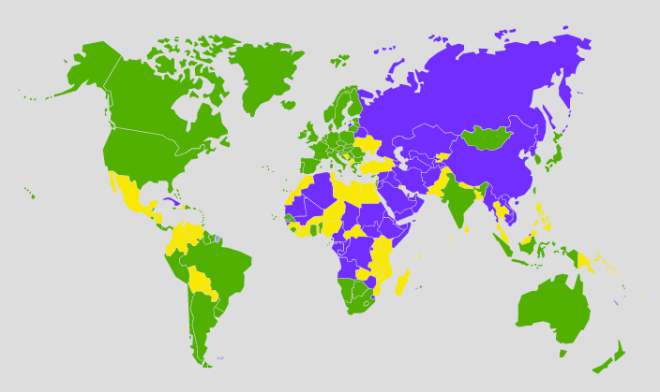
The International Budget Partnership (IBP) has recently released the results of the Open Budget Survey 2012, which measures “the state of budget transparency, participation and oversight in 100 countries around the world”. In the survey report, the authors highlighted the positive relationship between budget transparency and democracy:
A democratic political system is a significant factor that supports budget transparency (…) In fact, a switch from autocracy to democracy is typically associated with an improvement in a country’s OBI score by almost 20 points, after controlling for other variables. In addition, transparency seems to depend much more on current levels of democracy than on how long a country has been a democracy: for countries in transition, this means that rapid improvements in transparency can be achieved without having to wait for slow processes of learning and adaptation.
This adds to a growing body of literature showing that democracies (and electoral competition) are indeed more transparent than other types of regime. If the relationship between democracy and openness comes across as obvious, it also opens space for some questions about the open government movement and its strategy to promote transparency.
Political Rights and Civil Liberties in 2013 – Freedom House
Transparency, it seems, is one of the vital signs of well-functioning democracies. Chronic lack of transparency, on the other hand, emerges as the symptom of flawed democracies or authoritarian regimes. If this logic is correct (and the evidence suggests it is) advocating for transparency would correspond to treating the symptoms of a disease, rather than preventing it in the first place.
This is not to say that promoting transparency reforms (e.g. open data, open budgets) is a useless act. Treating a symptom is not a problem in itself: it alleviates the pain and may even prevent further complications. But neglecting to treat the cause of the symptom is surely a bad practice.
This begs a fundamental question: are open government advocates efficiently channelling their energy and resources when asking for more transparency from governments that have little or no inclination to democracy? Or are they failing to strike a balance which combines a focus on transparency with more fundamental reforms that promote, for instance, free, fair and competitive elections?
Granted, transparency and democracy are mutually reinforcing: it is difficult to think of a democracy without informed consent. And even well-established democracies still have a long way to go towards more transparency. But, for instance, going as far as considering that open government may blossom in non-democracies seems questionable to me. All the technology and transparency in the world is unlikely to realize its full potential in the absence of fundamental political rights and civil liberties.
It might be time to start focusing on the role that political regimes play in promoting values that are dear to the open government movement, such as transparency, participation and collaboration. And democracy – or lack thereof – is the elephant in the room.
In my frequent conversations about open government and citizen participation, the subject of elite capture (or “how representative it is”) is almost unavoidable. Some go as far as evaluating participatory initiatives on the grounds of an ideal notion of representativeness: participants should perfectly mirror the socio-demographic traits of the larger population from which they come.
But oddly enough, the same people who raise these concerns about participatory initiatives are much less inclined to apply the same reasoning and standards to traditional politics. In other words, few take the time to consider how representative and inclusive existing electoral democracy actually is. An article by Nicholas Carnes at the New York Times about political representation in the United States puts the issue into perspective:
If millionaires were a political party, that party would make up roughly 3 percent of American families, but it would have a super-majority in the Senate, a majority in the House, a majority on the Supreme Court and a man in the White House. If working-class Americans were a political party, that party would have made up more than half the country since the start of the 20th century. But legislators from that party (those who last worked in blue-collar jobs before entering politics) would never have held more than 2 percent of the seats in Congress.
I’ve yet to see a participatory process that produces similar results. But the limits of representation do not stop there. African Americans and Latinos are still greatly under-represented in US politics. The gender issue is no different: with the House of Representatives only 17 percent women, the Inter Parliamentary Union ranks the US 82nd in female representation in politics, behind countries such as the Arab Emirates, Sudan, Mauritania and Kazakhstan.
Obviously, the US is by no means exceptional in exclusion. Those working in the field of political participation have long been aware of the excluding effect of representative systems. As put by political scientist Arend Lijphart, unequal participation remains as representative democracy’s “unresolved dilemma.” Even more unfortunately, underlines Lijphart, inequalities in representation and influence “are not randomly distributed, but systematically biased in favor of more privileged citizens (…) and against less advantaged citizens”.
And it is from this unresolved dilemma that the raison d’être of participatory innovations stems. But rather than a replacement for representative systems (as misunderstood by some), participatory innovations are complementary mechanisms to enable the participation of individuals who are systematically excluded from traditional politics, ultimately increasing the overall diversity of voices that influence government.
This observation leads to a fundamental issue when assessing citizen participation initiatives: beyond questioning demographic representativeness, one must also consider the extent to which initiatives succeed (or not) in promoting the participation of previously marginalized sectors of society (i.e. inclusiveness).
So how inclusive are these mechanisms?
To continue with the US example, let’s consider one of the most exciting open government events taking place at the local level in the US: the recent adoption of participatory budgeting in NYC. Unlike most overhyped #opengov experiences, a team of researchers carried out an evaluation of the experience looking at, among other things, the extent to which it promoted inclusiveness. Below are some excerpts from the report [PDF]:
Twenty percent of PB voters identified themselves as African American; 14 percent as Hispanic or Latino/a; 2 percent as Asian and 2 percent as “Other.”
A higher percentage of African Americans participated in neighborhood assemblies (38 percent), compared to the full population in the four districts (31 percent).
Twenty-one percent of budget delegates and 19 percent of PB voters were born outside of the United States.
Participants that identified themselves as Black/African American were the most likely to volunteer to be budget delegates.
Women represented 64 percent of neighborhood assembly participants, 65 percent of budget delegates and 62 percent of voters in the PB process.
But how these numbers compare with participation in traditional politics is probably one of the highlights of the evaluation (emphasis is mine):
One of the most striking findings about who participated in PB [participatory budgeting] is how the data compares to other types of civic engagement, particularly voting patterns in NYC elections. Across the districts, PB engaged communities that have traditionally been uninspired by politics. People of color, low-income people and some immigrant groups turned out at higher rates than in previous elections.“
A few numbers worth noting:
Latino/as represented 39 percent of voters in the 2009 City Council elections. However, 50 percent of PB voters identified themselves as Latino/a (District 8 NYC).
Black or African Americans represented 79 percent of voters in 2009 City Council elections. However, 87 percent of the district’s PB voters identified themselves as Black or African American (District 45 NYC).
Twenty-two percent of PB voters had a household income of less than $10,000 compared to 4 percent of the district’s voters in the 2009 City Council election (District 8 NYC).
I have very little doubt, if any, that the contrast would be even starker if we compared the income of those who sit on the City Council and those who participated in the NYC participatory budgeting. In City Councils across the US, less than 10 percent of members come from a blue-collar background. Conversely, the numbers on income of participatory budgeting participants speak for themselves.
As citizen engagement gains traction in the open government agenda, inclusiveness should be one of the top priorities: both from normative and empirical standpoints, more inclusive initiatives are likely to produce better outcomes. The NYC experience provides valuable lessons for donors, policymakers, advocates, and enthusiasts alike. They can find more about it here and here.









 DemocracySpot